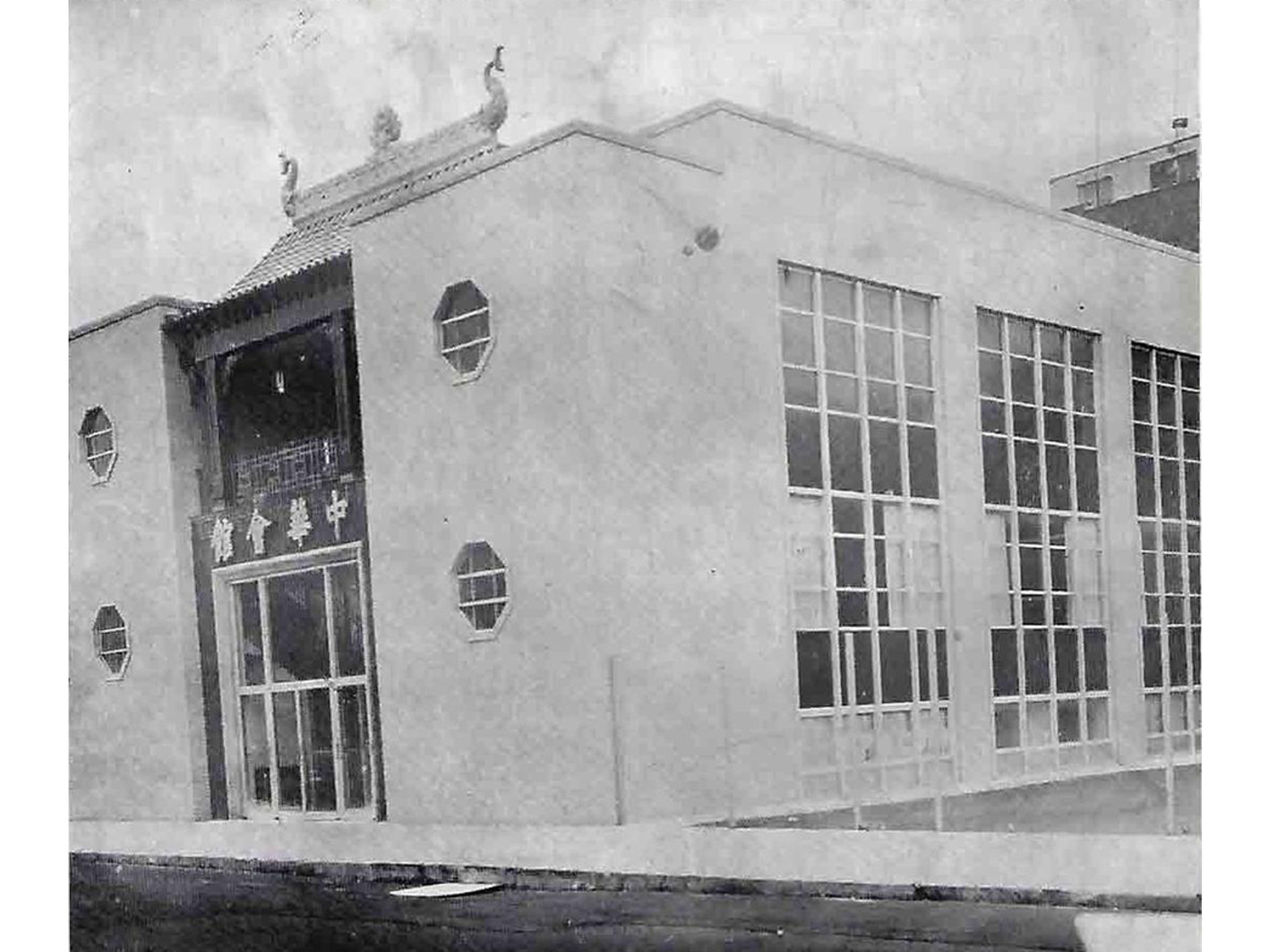
Robert Hoy and Leslie Moy both grew up in Chinatown, and their memories center on the 1950s and 1960s. They describe a small, close neighborhood held together by a handful of shared rooms.
“When I was growing up in Chinatown, I could walk down the street, I knew everyone, and they knew me. And everyone spoke Cantonese.”
Leslie Moy
Today, he said, he walks down the street and knows no one, and most of what he hears is Mandarin. He also recalled that his parents, both born in Chicago, pushed him to look beyond the neighborhood; his American-born classmates spoke English and followed baseball.
Three classrooms behind On Leong
Before St. Therese had its own school building, participants recalled, classes met in rooms at the back of the On Leong Merchants Association building, taught by Maryknoll sisters. Several grades shared a room and were divided by rows. One participant estimated about 100 children in those rooms; graduating classes ran to 16 or 17 students. Teaching was remembered as demanding, and the education as solid preparation for high school.
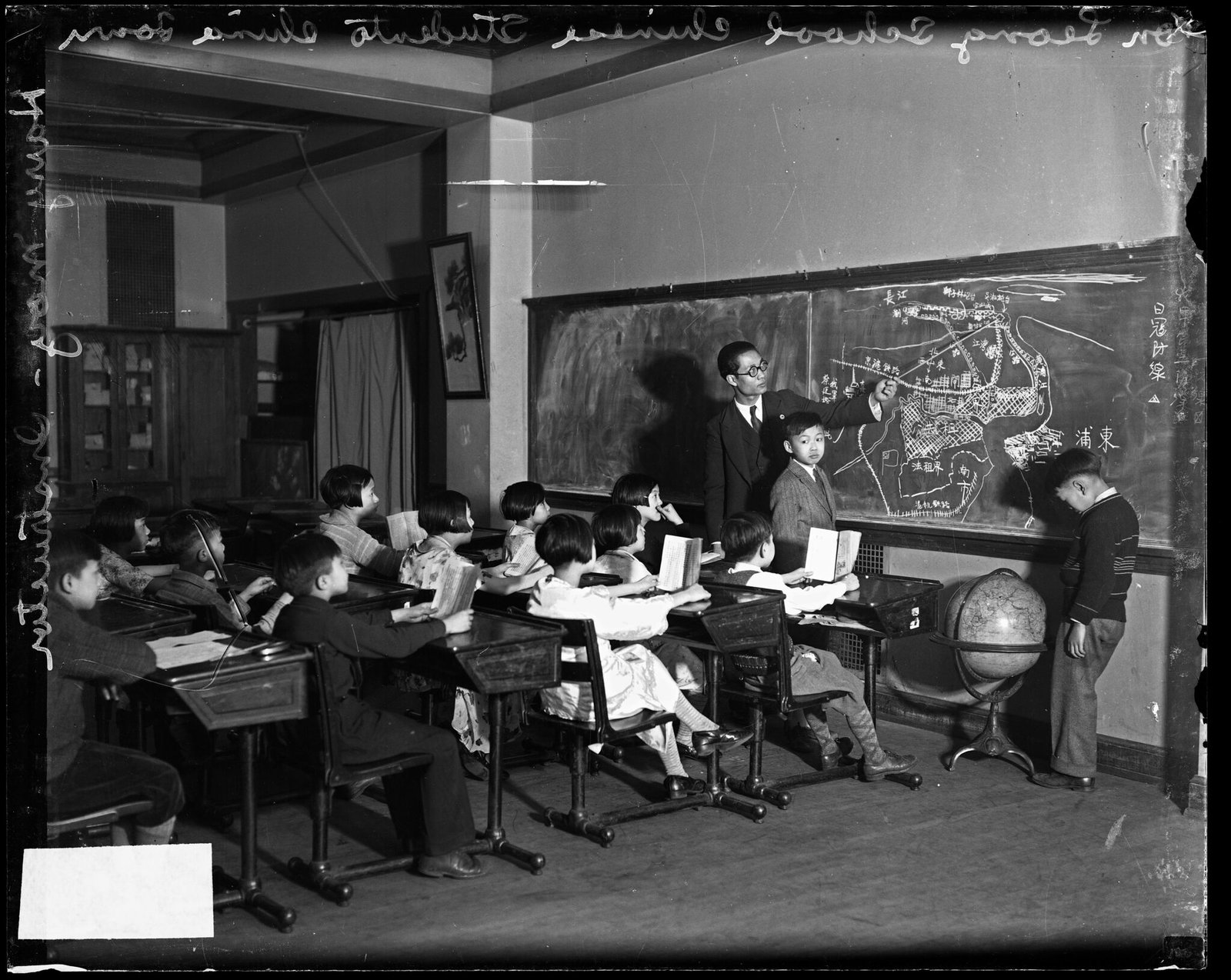
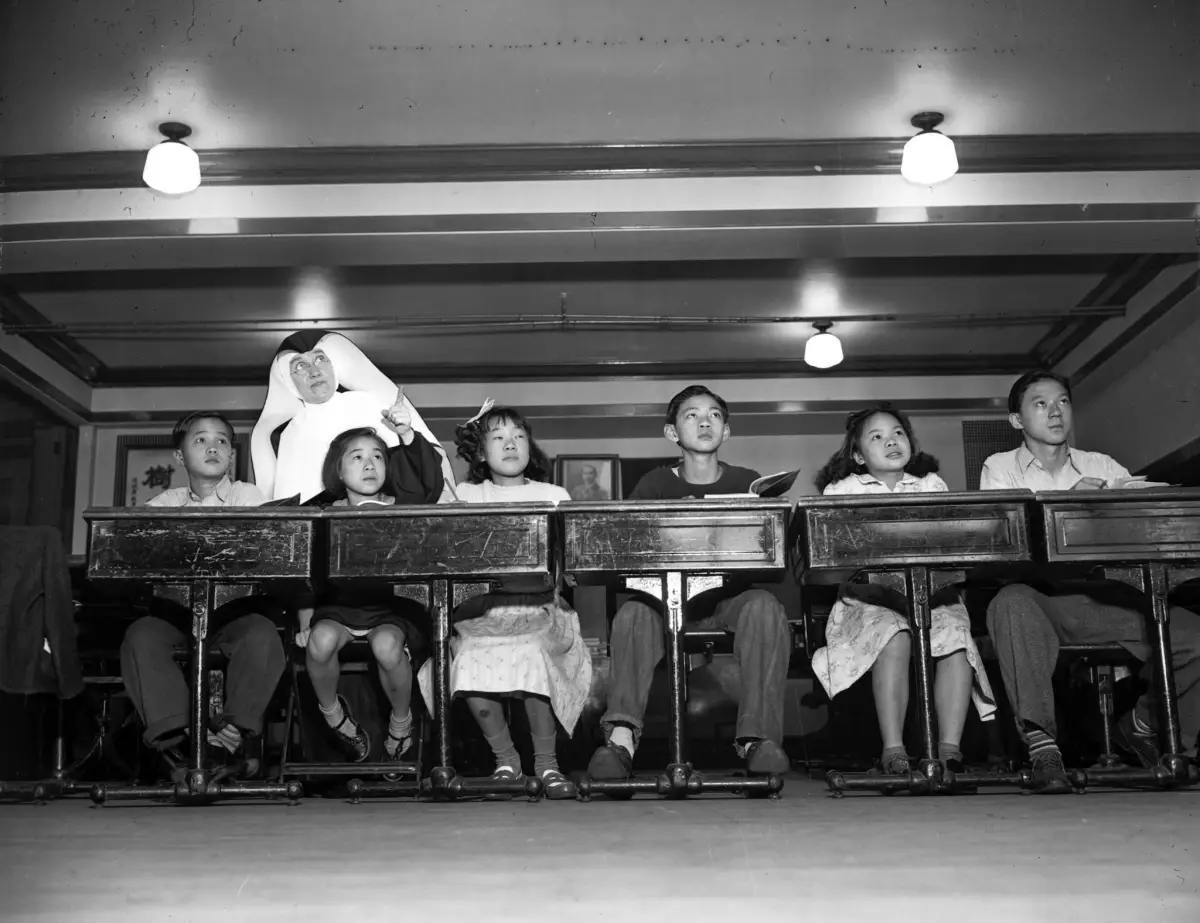
The new St. Therese School on 23rd Street was recalled as opening in 1962, with students helping to carry desks from the old rooms. Participants credited a benefactor they remembered as Mr. Callahan with making the building possible, and remembered that he arranged wrapped Christmas gifts and a Santa Claus for every child.
The parish itself began, they said, as St. Therese Mission in a single storefront next to what is now the Chinese Christian Union Church, with a chapel on the second floor and a rectory on the third. As the congregation outgrew it, the Chinese community began sharing Santa Maria Incoronata on Alexander Street with its Italian congregation, holding masses at different hours.
The October bazaar
Every October the school held a bazaar. Children sold strips of scrip in 5-, 10- and 25-cent denominations, with a bicycle for whoever sold the most. Mothers prepared food, including grilled beef skewers that one participant believed were first sold in Chinatown at that bazaar.
Family associations
Participants explained that family associations are organized by surname rather than strict blood relation: anyone with the same name, or from the same village, could join, and smaller clans sometimes shared a hall. They began as a way to settle disputes and help members without going to the courts. Today, participants said, they are mainly social: annual dinners where children meet older members, small awards for students who do well in school, and mahjong.
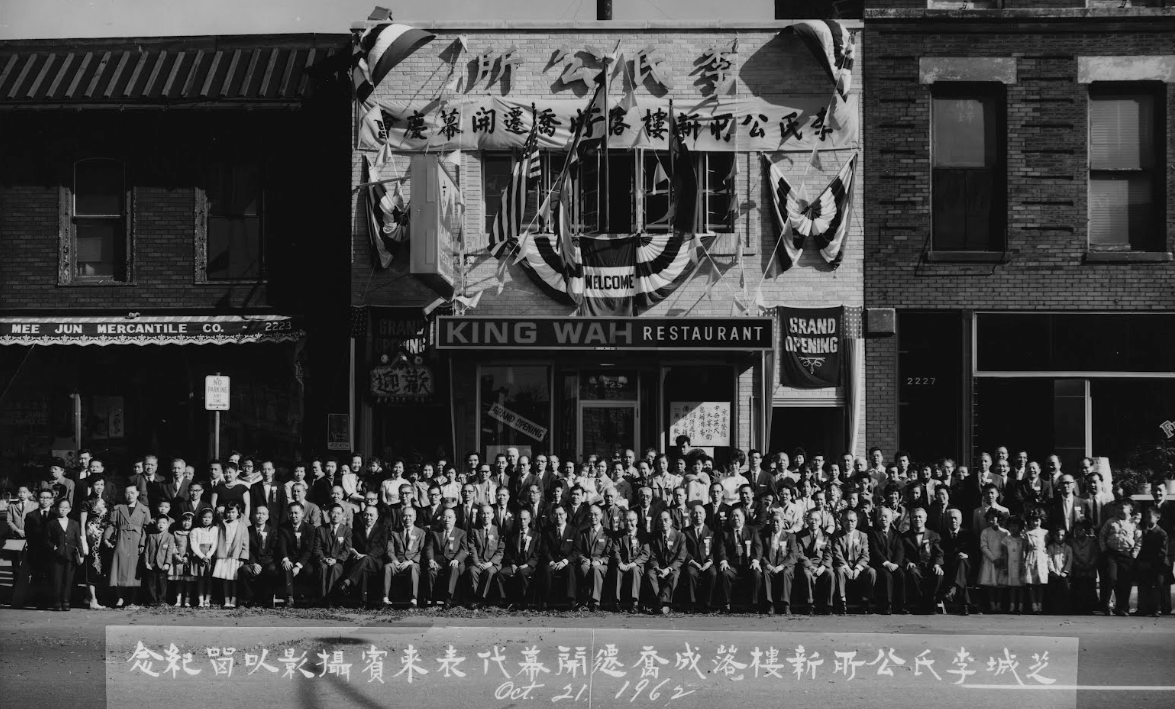
Looking at the 1962 grand opening photograph above, a participant identified the Lee association building at the head of 22nd Place only by spotting the shop next door. The association still occupies the second floor.
Chinatown City Hall
The On Leong building’s third floor was remembered as having three parts: a courtroom, a shrine where offerings were burned for ancestors, and a room of museum displays. School groups were brought through in tight time slots. The courtroom, participants explained, heard disputes between merchants and families, often a new business opening next to an established one, at a time when language barriers kept many residents from the city’s courts.
“When the law is foreign to you, the only thing you could do is fix it yourself.”
A participant
A drum corps on LaSalle Street
Robert Hoy and Leslie Moy both marched in Chinatown’s youth drum corps, sponsored through the American Legion. Parents paid for instruments and a teacher, and Robert Hoy remembered being taken to the Ludwig Drum Company to choose drums. The corps trained in the former On Leong classrooms and practiced marching on LaSalle Street, between Wentworth and the railroad tracks. Fifty or sixty children took part, competing around the Midwest and once performing on the steps of the U.S. Capitol.
“These people gave their hearts to helping us kids have a better life, but we didn’t realize it at the time.”
Robert Hoy
The pool hall with one rule
Under the restaurant that later became Three Happiness, in a building since demolished, was a pool hall called Dragon Cue. Participants admitted they were under age when they joined. Its proprietor, Jimmy Hong, was remembered as a second father who taught the boys to play well and to behave. In the 1960s, participants said, racial tension in surrounding neighborhoods meant Chinese kids were often caught in the middle; inside the hall, the rule was that it ended at the door.
“I don’t care what color you are, it ends at the door. Everybody’s gotta respect everybody.”
Jimmy Hong’s house rule, as a participant recalled it
A community center open to everyone
The Chinese Consolidated Benevolent Association building at 250 W. 22nd Place was described as more open than On Leong: any association or family could use it. Participants listed a third-floor hall with a small stage for dance classes, visiting performers and political speeches, and a lower level that now serves a daily low-cost lunch for seniors.