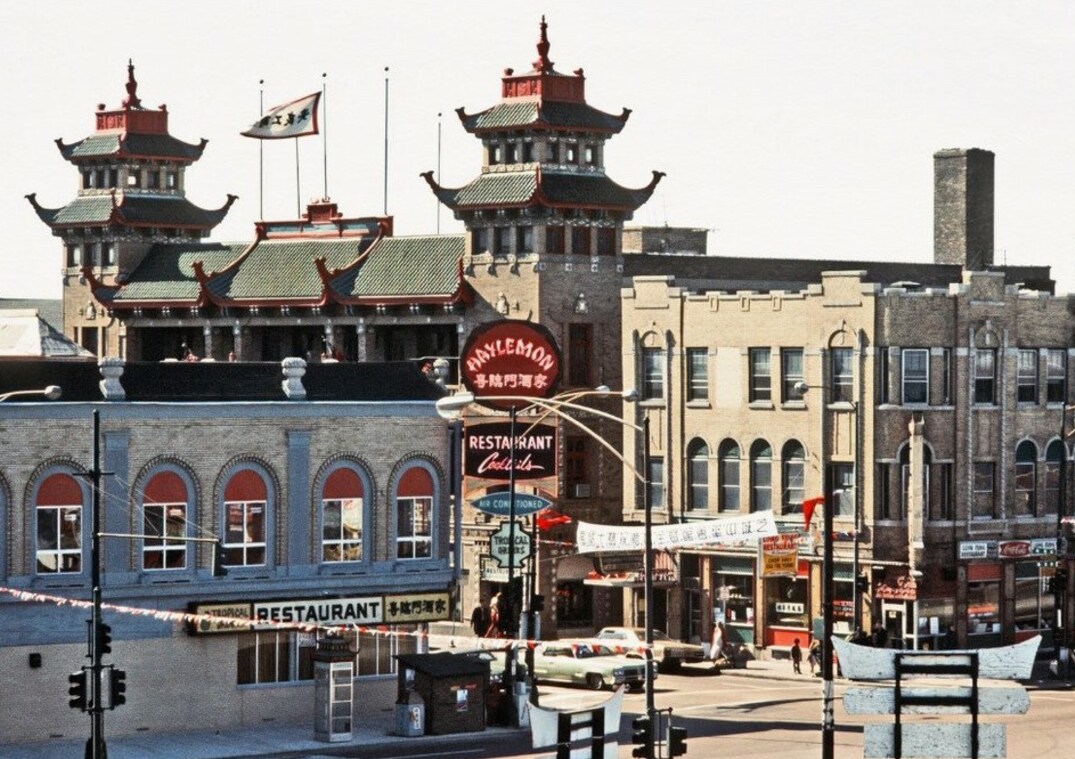
Chicago has one of the largest and most important Chinatowns in the United States, alongside San Francisco and New York. It is still a living and growing neighborhood: a center for local businesses, cultural traditions, community organizations and immigration history.
How this Chinatown began
Today’s Chinatown began to take shape in 1912, when the Chinese community moved from Chicago’s first Chinatown near South Clark Street and Van Buren Street to what is now the Armour Square–Bridgeport area, around Cermak Road and Wentworth Avenue. In many American cities, Chinatowns that stayed beside the central business district were later reduced by downtown expansion, highway building and urban renewal. Chicago’s Chinatown lost blocks too, but it has remained a living community.
Many of the institutions that shaped Chinatown, including the On Leong Merchants Association, the Moy Family Association and the Chinese Christian Union Church, began on Clark Street and moved south into buildings that still stand in the survey area. Read about Chicago’s first Chinatown.
A century of buildings
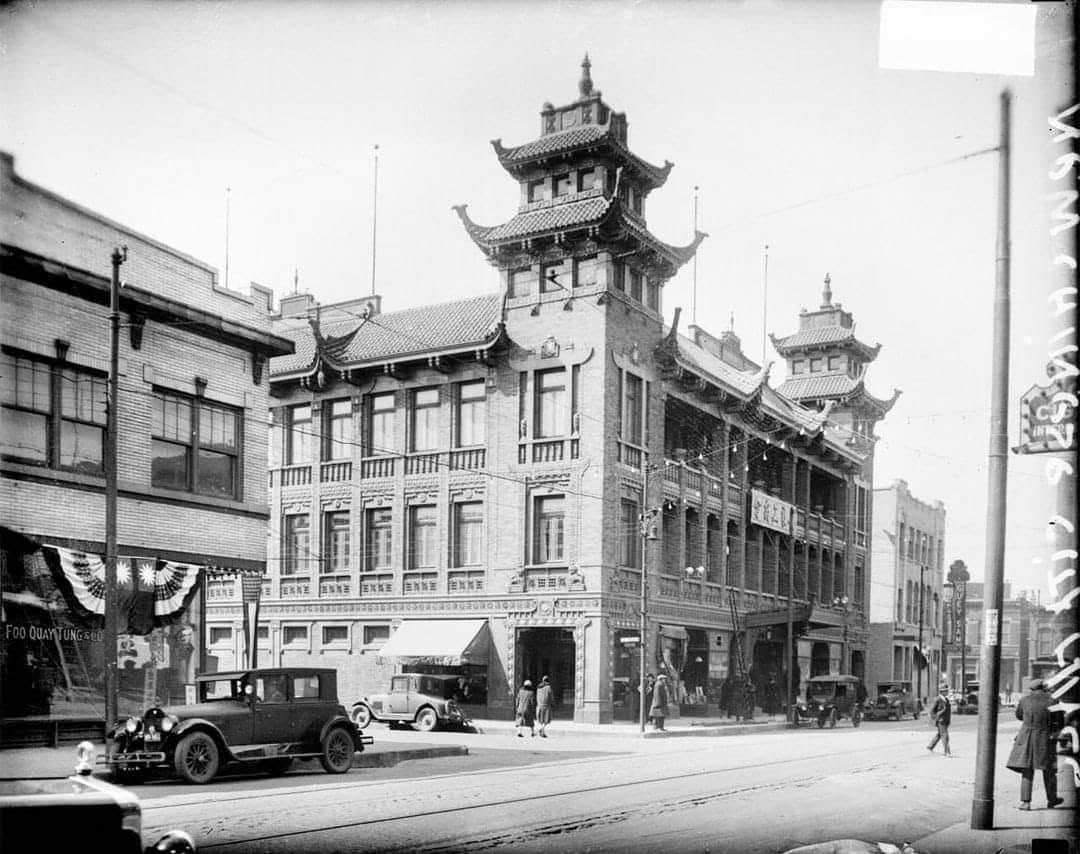
The buildings along Wentworth Avenue and Cermak Road form a rich and layered historic area, with construction dating from roughly 1870 to 1970. It includes the Chinese-inspired buildings of the 1920s that many people recognize today, such as the former On Leong Merchants Association Building and the Won Kow Building. It also includes older Victorian and Italianate buildings on Wentworth Avenue, built in the late nineteenth century before Chinatown moved into the area.
Together these buildings show how the neighborhood changed over time, and how the Chinese community adapted and gave new life to the buildings that were already there.
Long overlooked
Chinatown’s architectural and cultural importance has been downplayed for a long time. In the entire city, only one designated Chicago Landmark is connected to Chicago’s Chinese and Asian American communities: the former On Leong Merchants Association Building, now Pui Tak Center, designated in 1993.
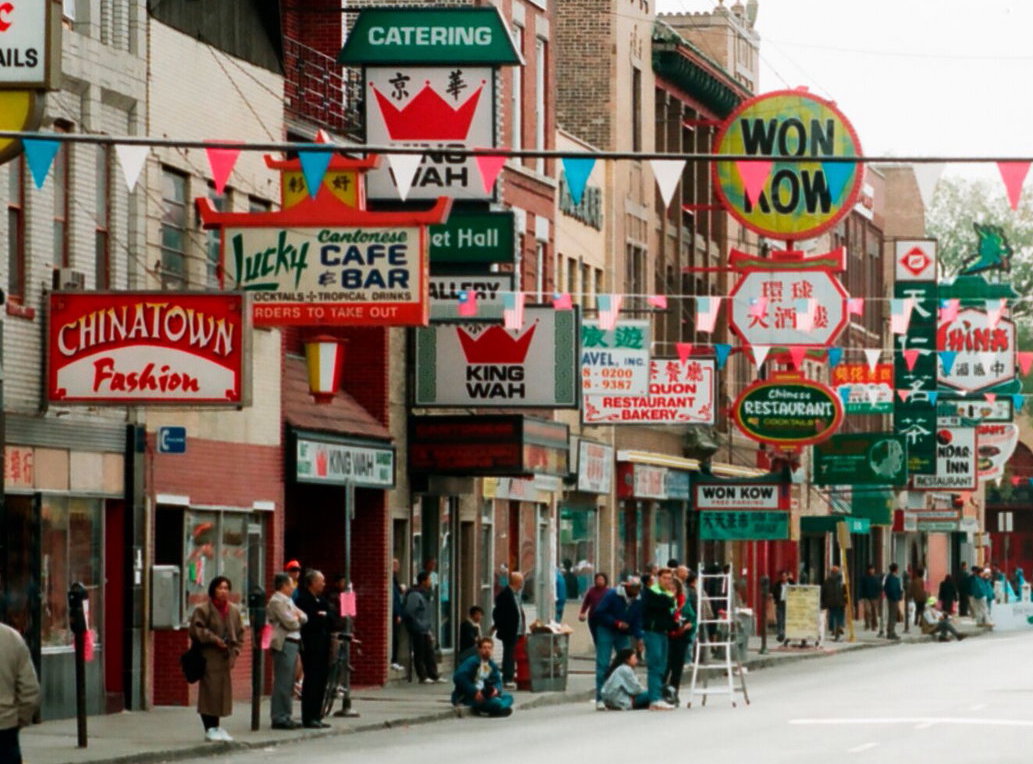
Meanwhile, the street continues to change. Within the survey area, several buildings have been demolished or replaced in recent decades, including the former Lucky Coffee Shop building at 2221 S. Wentworth Avenue and the building at 2314 S. Wentworth Avenue, demolished in 2023. Other facades have been refaced, and many of the neon and blade signs that once made the street famous at night are gone. Preservation Chicago has also drawn attention to what remains of the original Chinatown in the South Loop by including it among its Most Endangered places.
Why a landmark district
Preservation Chicago believes these communities deserve the recognition of a full landmark district, and that Wentworth Avenue and Cermak Road form a special historic area that should be protected. In our assessment, the district meets Criteria 1, 4, 6 and 7 of the Chicago Landmarks Ordinance, which concern a property’s value as part of the city’s heritage, its architecture, its expression of a distinctive theme, and its unique visual character.
District designation focuses mainly on what people see from the street: facades, rooflines and the character of the streetscape. It is not meant to turn a neighborhood into a museum. Owners can still renovate, change uses and invest behind historic fronts, and designated buildings may become eligible for programs such as the City’s Adopt-a-Landmark fund, which has supported facade restoration.
Designation is decided through a public process led by the Commission on Chicago Landmarks and City Council, in which property owners, residents and community organizations have a voice. This site shares the evidence behind our recommendation so that everyone can take part in that conversation from the same facts.
The survey
With support from a grant from the National Trust for Historic Preservation, Preservation Chicago has been conducting a historic resources survey of Chinatown as part of its Chinatown Designation Project (2025–2026). To our knowledge, no comprehensive building-by-building survey of Chinatown’s commercial corridor had been done before.
We have assembled a detailed record of the district’s buildings, including their architects, construction dates, architectural features and historic uses. The research draws on Sanborn fire insurance maps, building permit records, Cook County records, trade publications and newspaper archives. Where the evidence is incomplete, the entries say so. We are also beginning conversations with public officials and community members.
Why a website
Survey findings usually end up in reports that few people read. We wanted the research to be open and easy to use: a map where anyone can find a building, see historic photographs beside its current condition, and read what is known about it.
A street is also more than its buildings. The oral history pages share memories from Robert Hoy and Leslie Moy of the restaurants, schools, associations and people that gave these buildings their meaning. We hope the site helps keep those names and stories in circulation.
Chinatown is a very important Chinese and Asian American historic district. We hope the City of Chicago will consider it for landmark designation.
Reading the ratings
The colored dots and badges show each property’s rating in the Chicago Historic Resources Survey (CHRS), the citywide survey of older buildings conducted by the City of Chicago. A CHRS rating is not the same as landmark designation.
Sources, limits and corrections
Building entries distinguish documented facts from reasonable inferences wherever possible. Oral history is presented as recollection, and differences from the documentary record are noted on each page. Research is ongoing, and some dates, names and attributions may change as new evidence appears.
If you have photographs, family records, memories or corrections to share, please contact Preservation Chicago.