The conversation opened where the survey’s own story begins: with a community that left the Loop and rebuilt itself two miles south.
A family that arrived in 1878
Leslie Moy traced his family to his grandfather, Moy Dung Yee, the third of three brothers. As he told it, the brothers came from Toisan (Taishan) by way of San Francisco, and his grandfather reached Chicago in 1878, a few years after the Great Fire. The family ran small trading companies around Clark Street and Van Buren Street, where he estimated the Chinese community at roughly 200 people.
For the documented history of the Clark Street community, see Before Wentworth: Chicago’s first Chinatown.
Asked whether they came for the railroads or the gold fields, he said neither: they came for opportunity, and they were traders.
Why the community moved
Participants described the move south, which they placed between about 1912 and the 1920s, as the result of several pressures at once: discrimination, rising rents, and the expansion of downtown. Cermak and Wentworth, by contrast, was remembered as a mixed area with Italian and Black residents where Chinese newcomers could settle without much resistance.
“They had to find an area that they would be accepted, and there would be not a lot of competition.”
Leslie Moy
Preservation Chicago staff added a comparative point: in many American cities Chinatown remained attached to the central business district and was later squeezed by it. Chicago’s relocation, in this view, moved the community out of the path of the financial district.
On Leong goes first
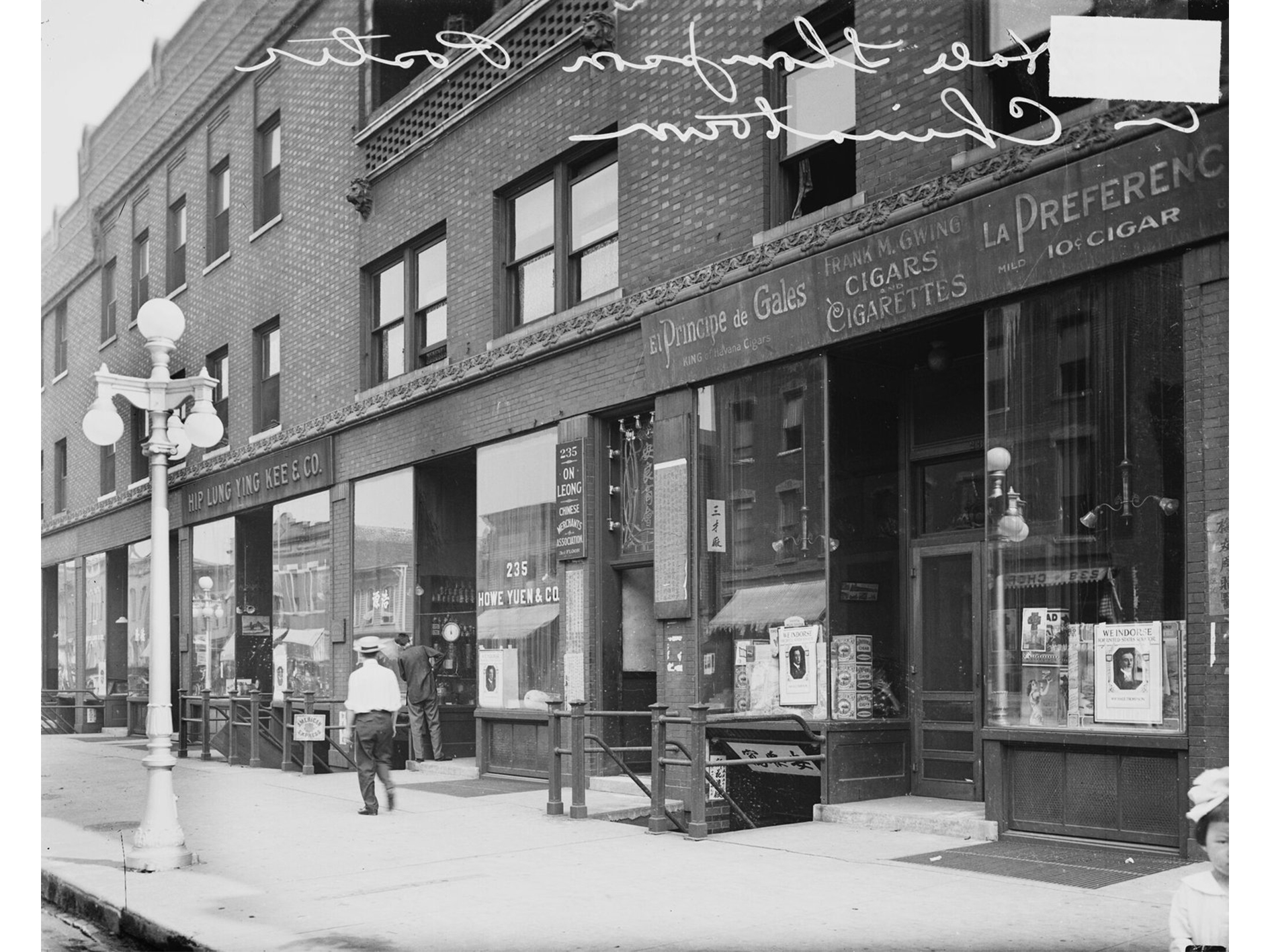
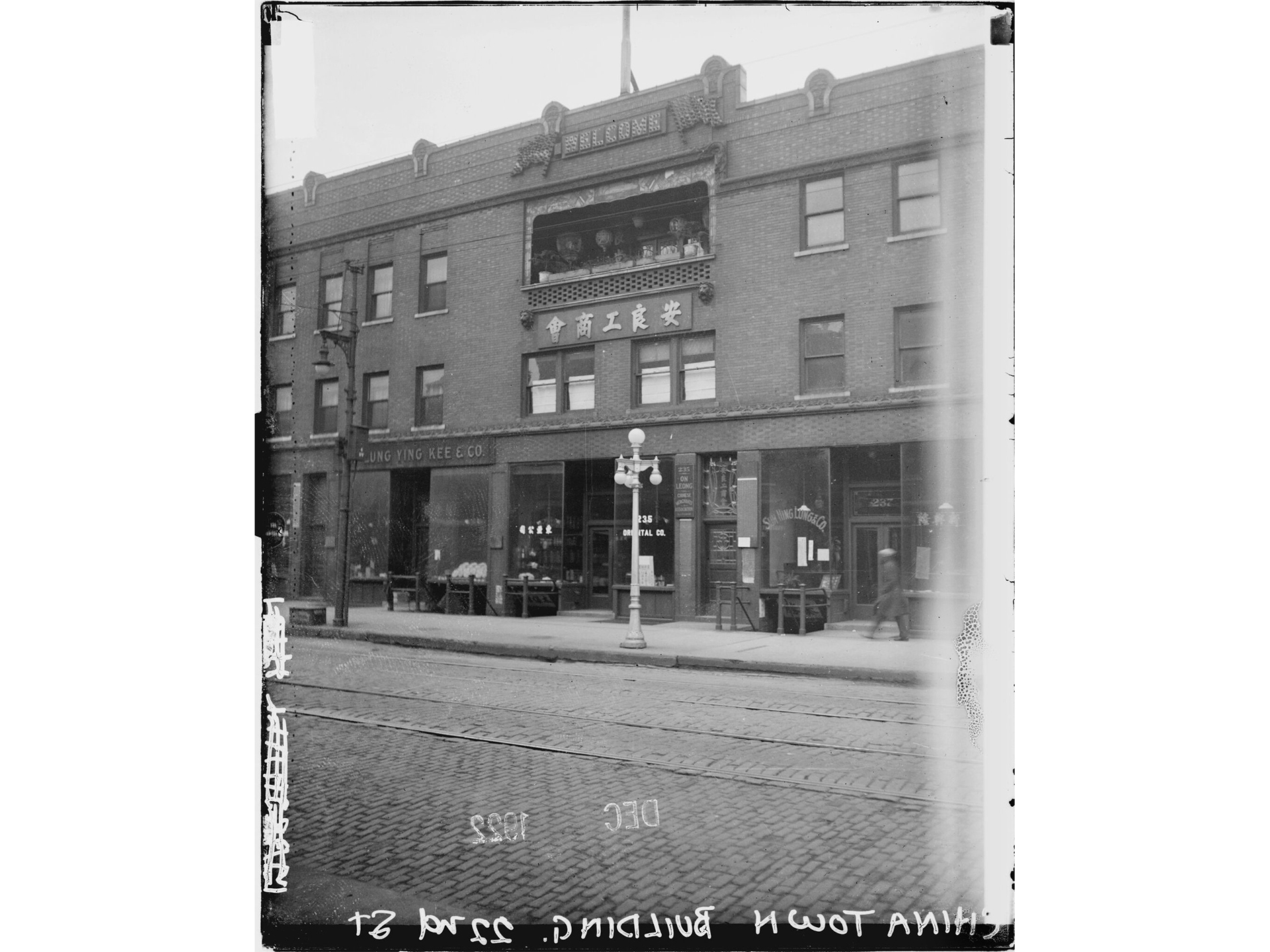
Participants credited the On Leong Merchants Association with leading the relocation and with buying the first buildings on Cermak Road. One participant identified the association’s first home on the new street at about 235 W. Cermak, within the three-story row at 219–249. Its open upper balcony has since been bricked in, he noted, but two carved lion heads that once drained the balcony are still visible, which is how he recognizes the building.
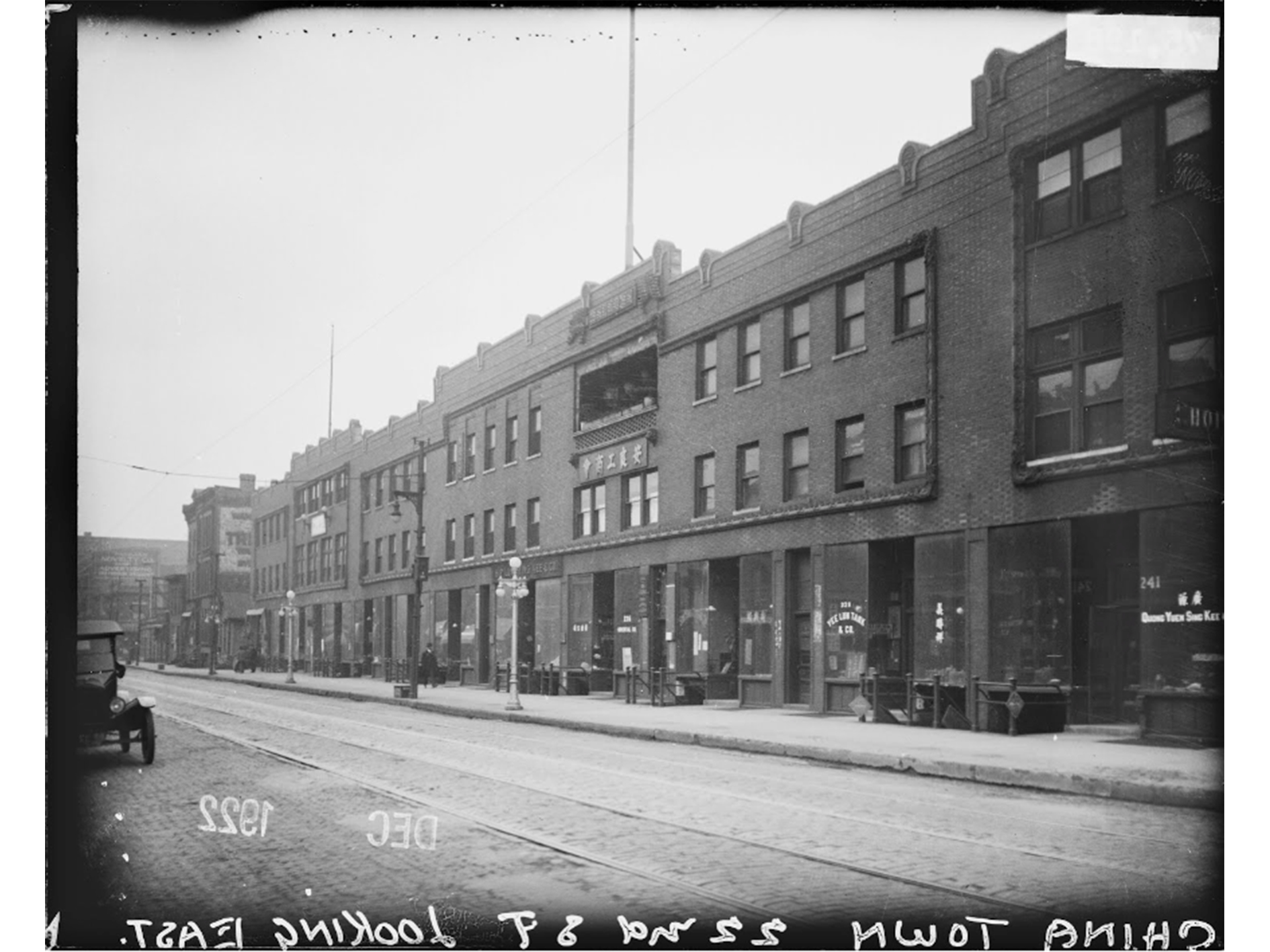
Robert Hoy shared a story his mother told him about the row. In her account, the developer, Jacob J. Kern, had been raised by a Chinese family, became a successful lawyer, and built the ten storefront buildings with terra-cotta dragons as a gesture of thanks, intending to rent them to Chinese tenants. When Kern later sold, he recalled, Chinese buyers had to compete with Italian buyers to keep the buildings.
Survey research does document Kern as a developer of this block, with H. J. Swanson as architect. The account of his upbringing is family oral history and has not been confirmed; see the notes on sources.
Buildings pulled back from the street
Several people in the room had heard that when 22nd Street was widened into what became Cermak Road, buildings on its south side were cut from their foundations and moved back rather than demolished. Participants recalled photographs showing horses pulling the structures, and placed the event around 1927, roughly 15 years after the buildings went up. One researcher suggested that their relative newness explains why owners went to the trouble of moving them.
Life in the storefronts
Looking at early photographs of the Cermak row, participants described how the storefronts were used in their childhood. Some held businesses; others were homes. Older men who had come from China alone would share a storefront, perhaps four to a room, with a curtain across the front window and beds in the back. With no air conditioning, they sat on chairs along Cermak on hot nights, waiting for the rooms to cool.
“There’s no TV that you can watch and no radio you can listen to or understand.”
Robert Hoy
A Chinese-language newspaper printed on Archer Avenue was remembered as their main source of news. Basements were lived in too, reached by stairs from the sidewalk; the iron railings visible in the photographs once guarded those stairwells. The round covers in the sidewalk, one participant explained, led to coal vaults: a truck would dump coal on the walk and residents would shovel it below for the winter.
Neighbors and lenders
Participants repeatedly returned to the role of Italian American neighbors. One put it plainly: the Chinese community “could not have gotten where we are without the help of the Italians.” They recalled that through the 1960s it was hard to borrow money downtown for projects in Chinatown, and credited Lakeside Bank and members of the Cacciatore family with lending when others would not.
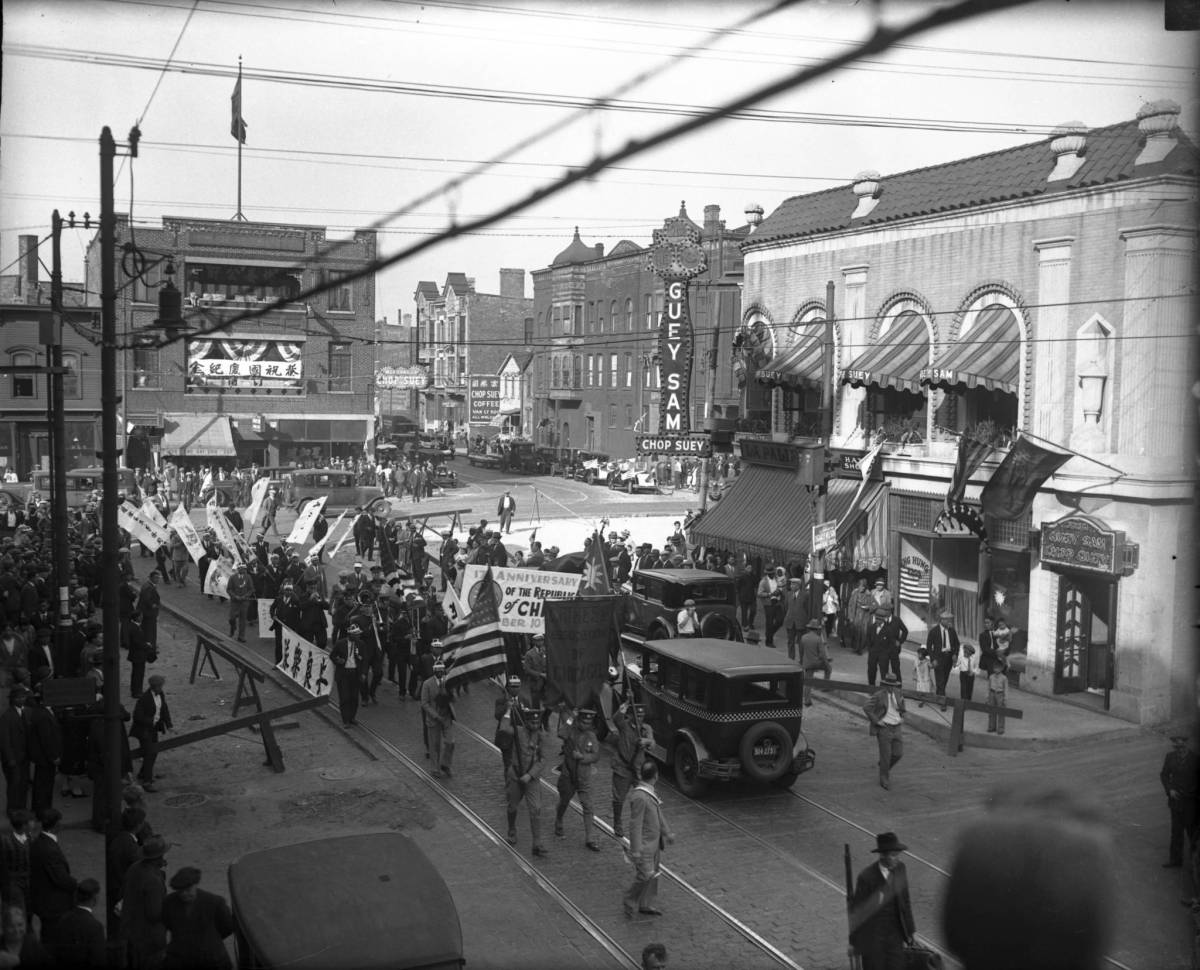
Viewing a 1928 photograph of the Cermak and Wentworth corner hung with American flags and the flag of the Republic of China, participants wondered whether it recorded the opening of the new On Leong building or a fundraising parade. They did not reach a firm conclusion.