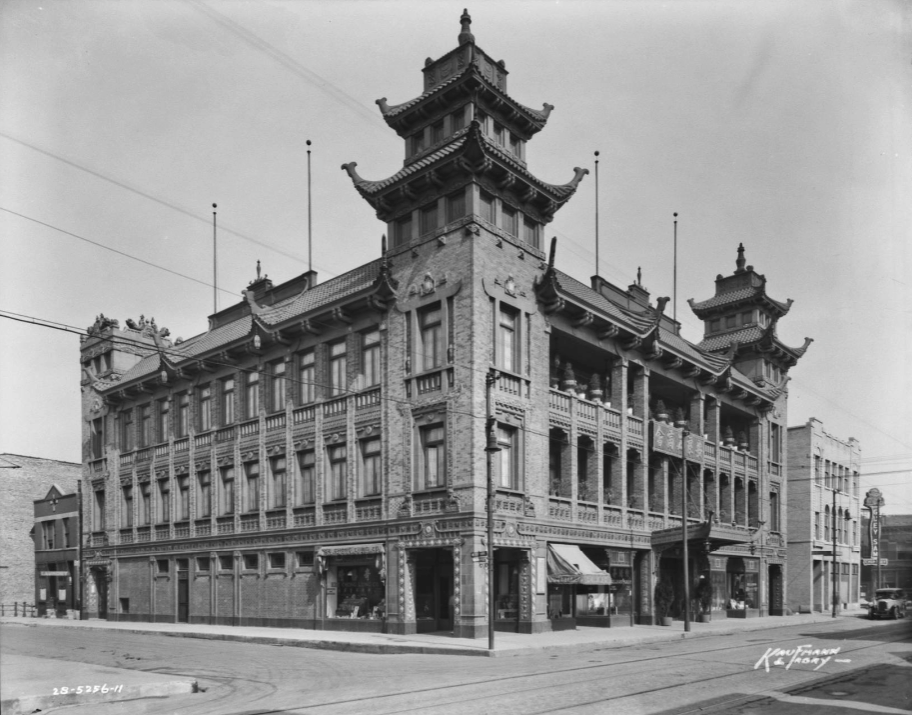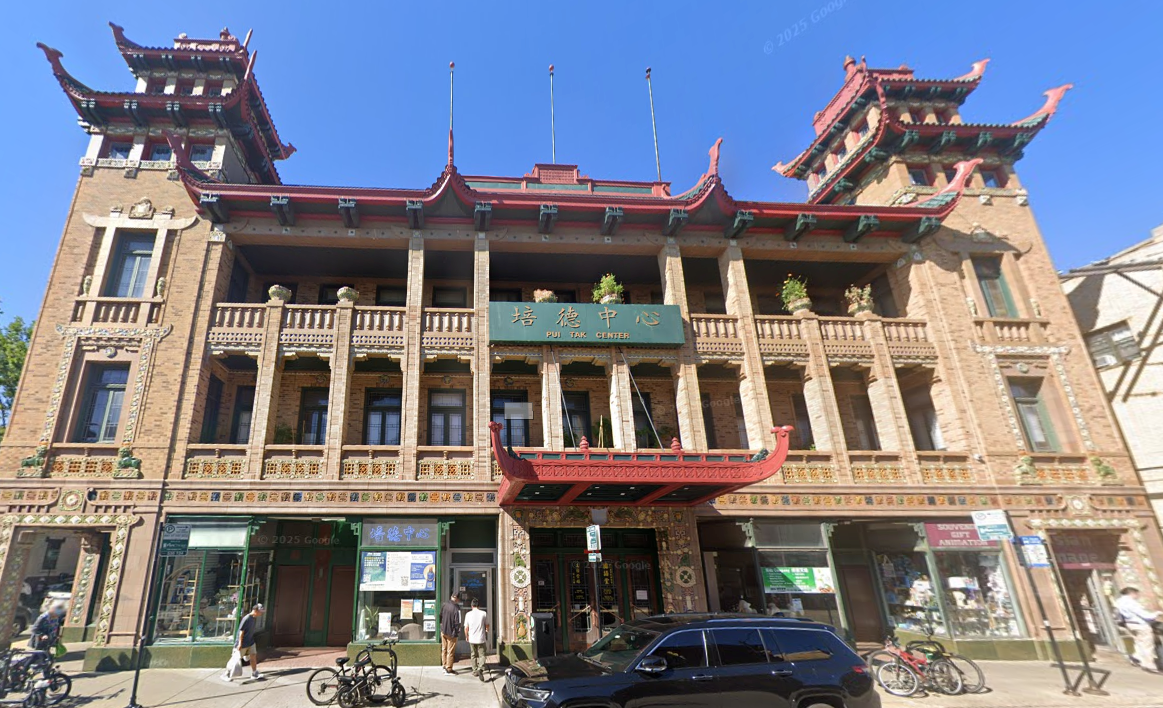
The building located at 2212-20 S. Wentworth Avenue, now known as Pui Tak Center, was originally built as the new headquarters for the On Leong Merchants Association, a Chinese business and mutual-aid organization (tong) whose Chicago branch was established in 1905 as part of a national organization founded in the 1890s. The association had originally been based on Clark Street, in Chicago's original Chinatown in the South Loop. As Chinese-owned businesses there faced displacement pressures from downtown redevelopment, On Leong relocated to 22nd Street. The subsequent widening of 22nd Street (later renamed Cermak Road) during the 1920s then prompted a further relocation to Wentworth Avenue, where the association established what became known as "New Chinatown."
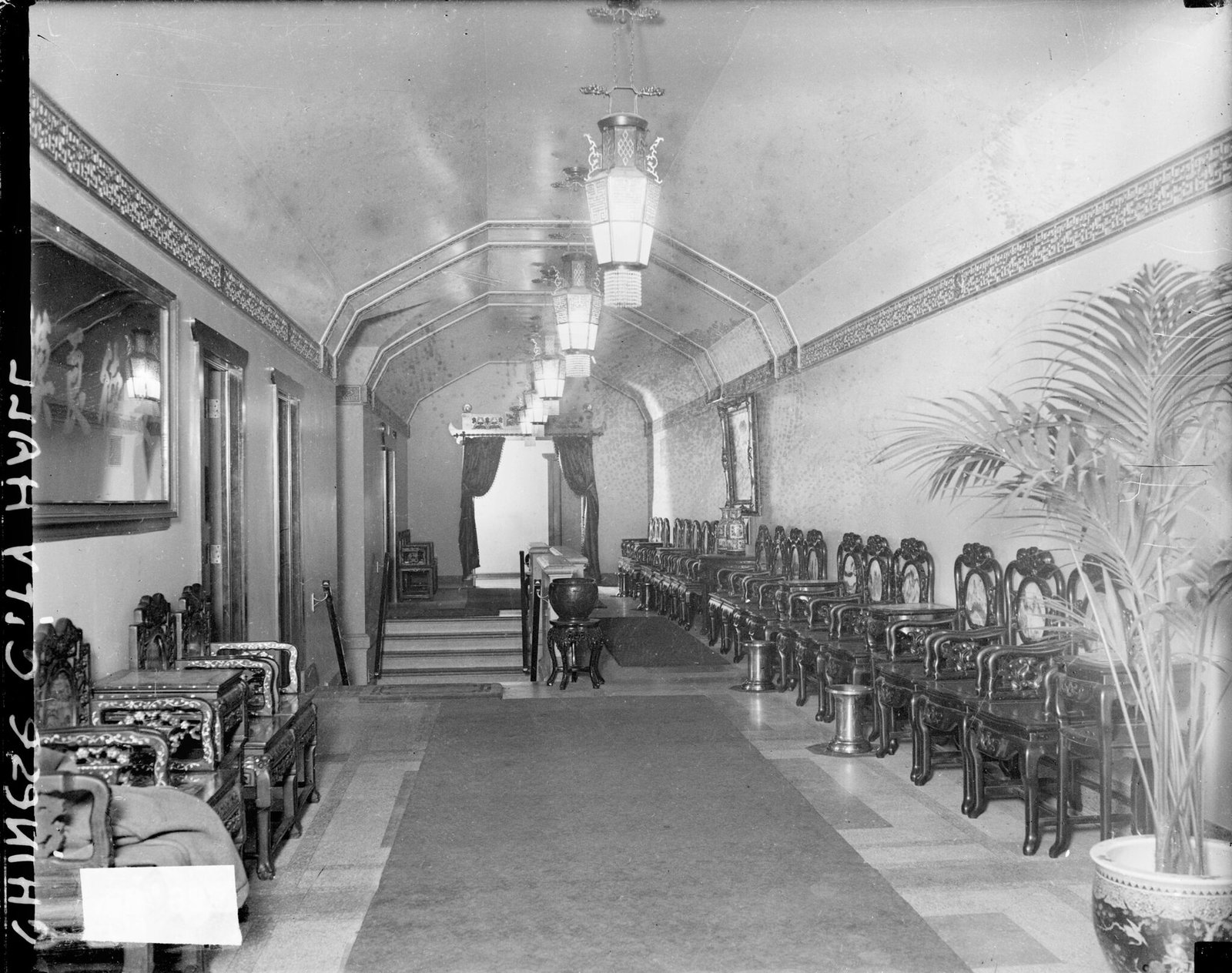
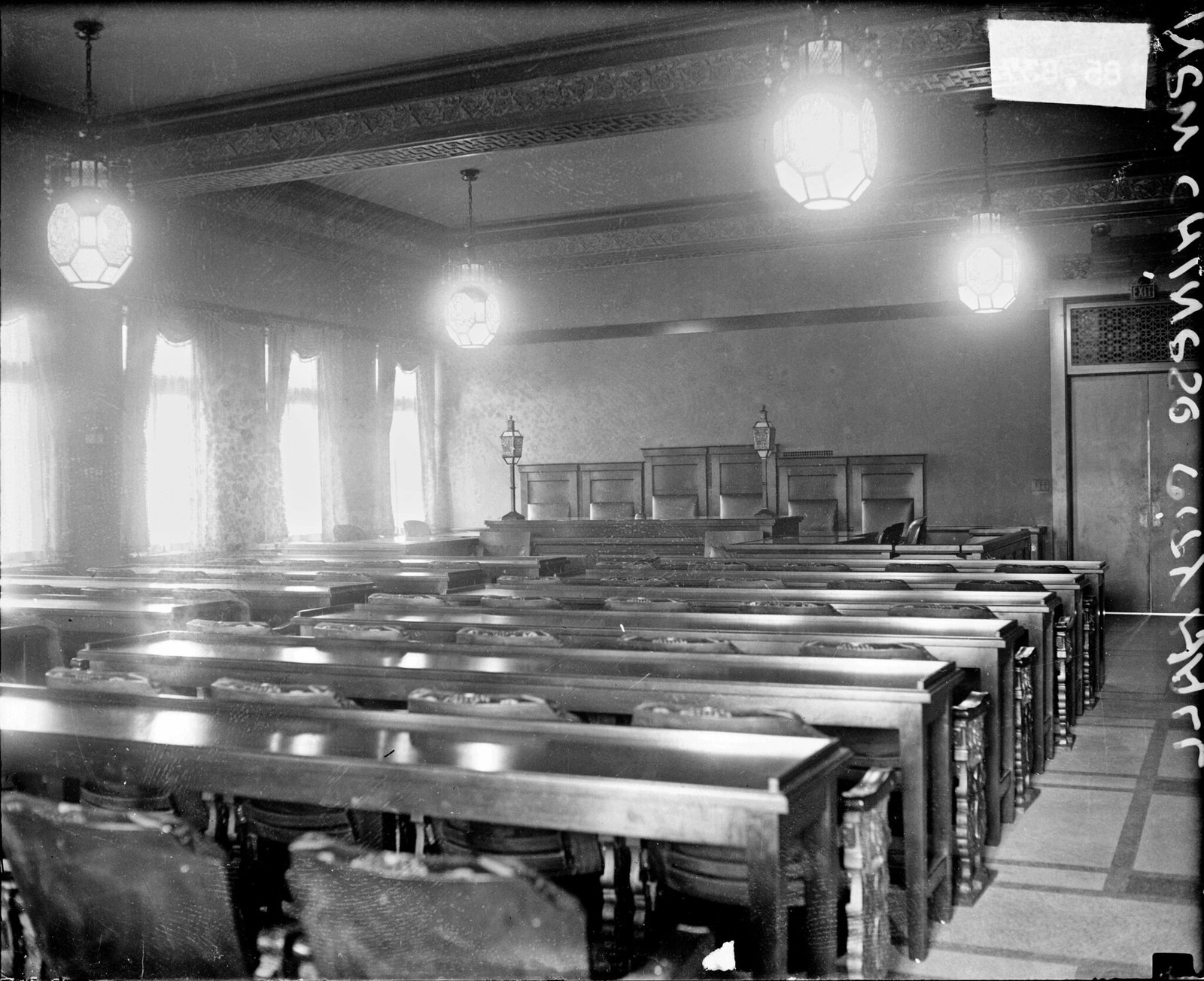
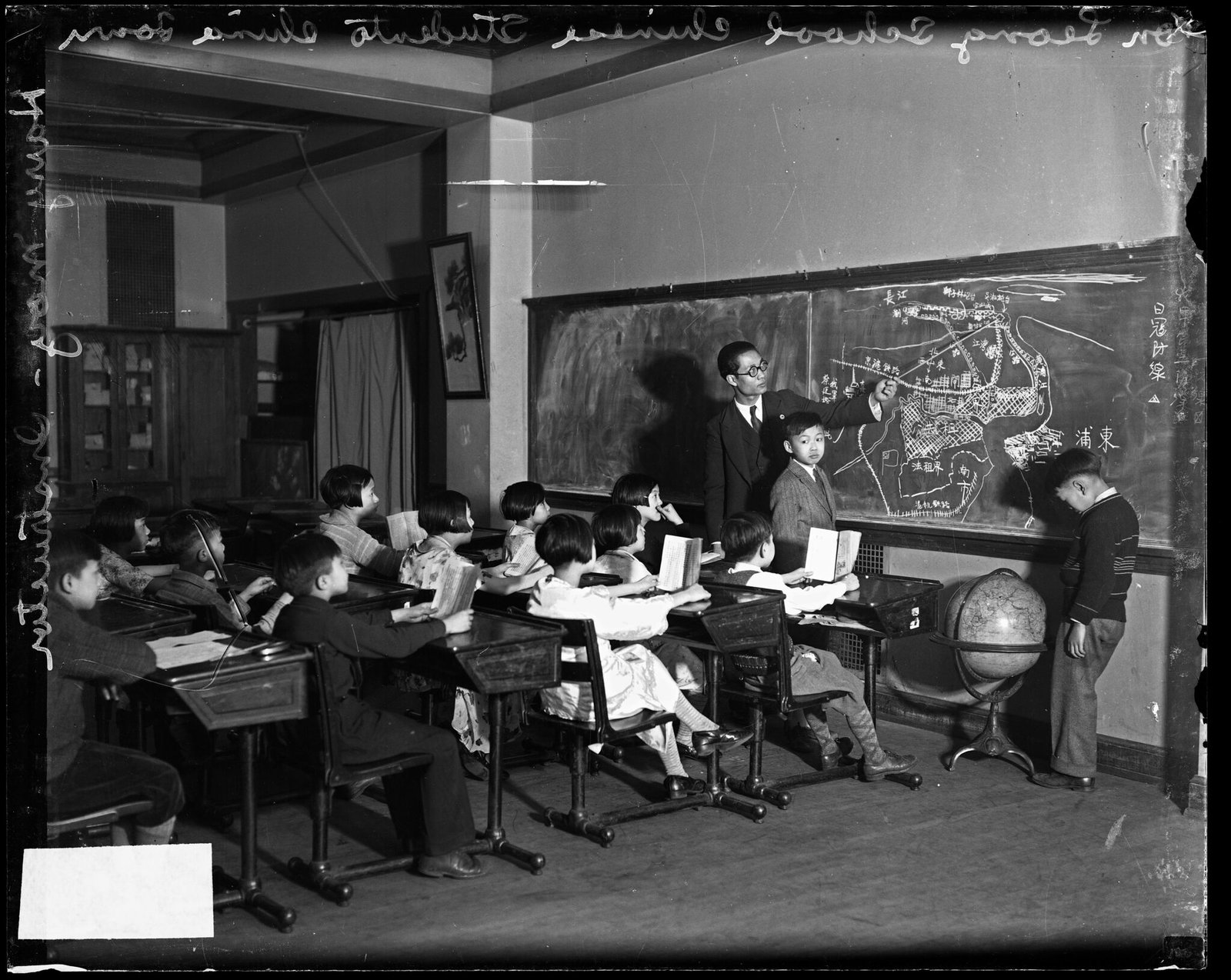
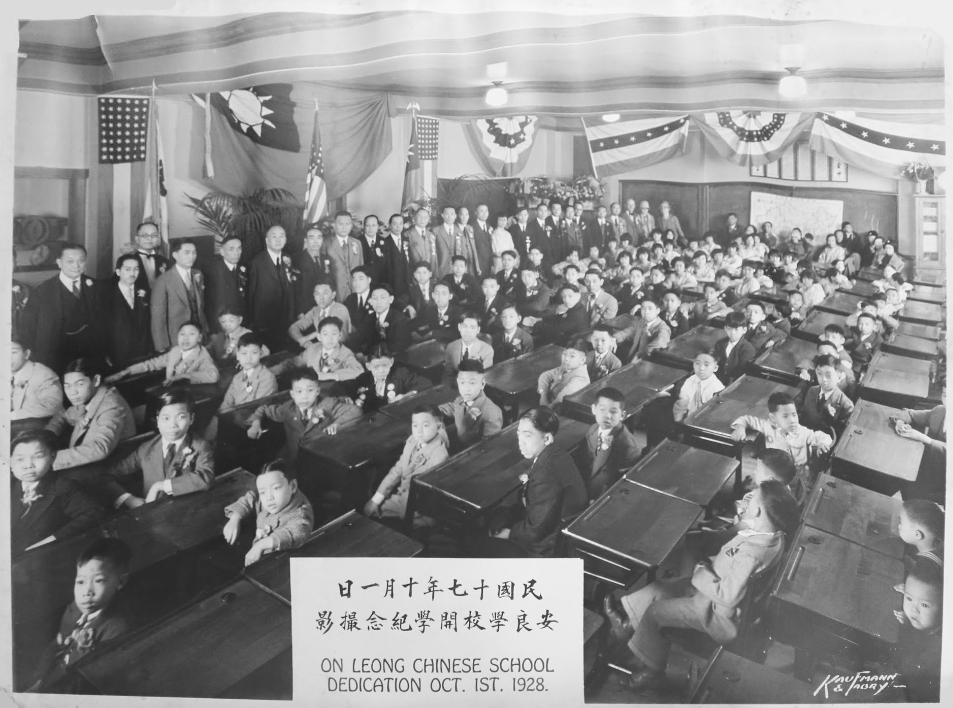
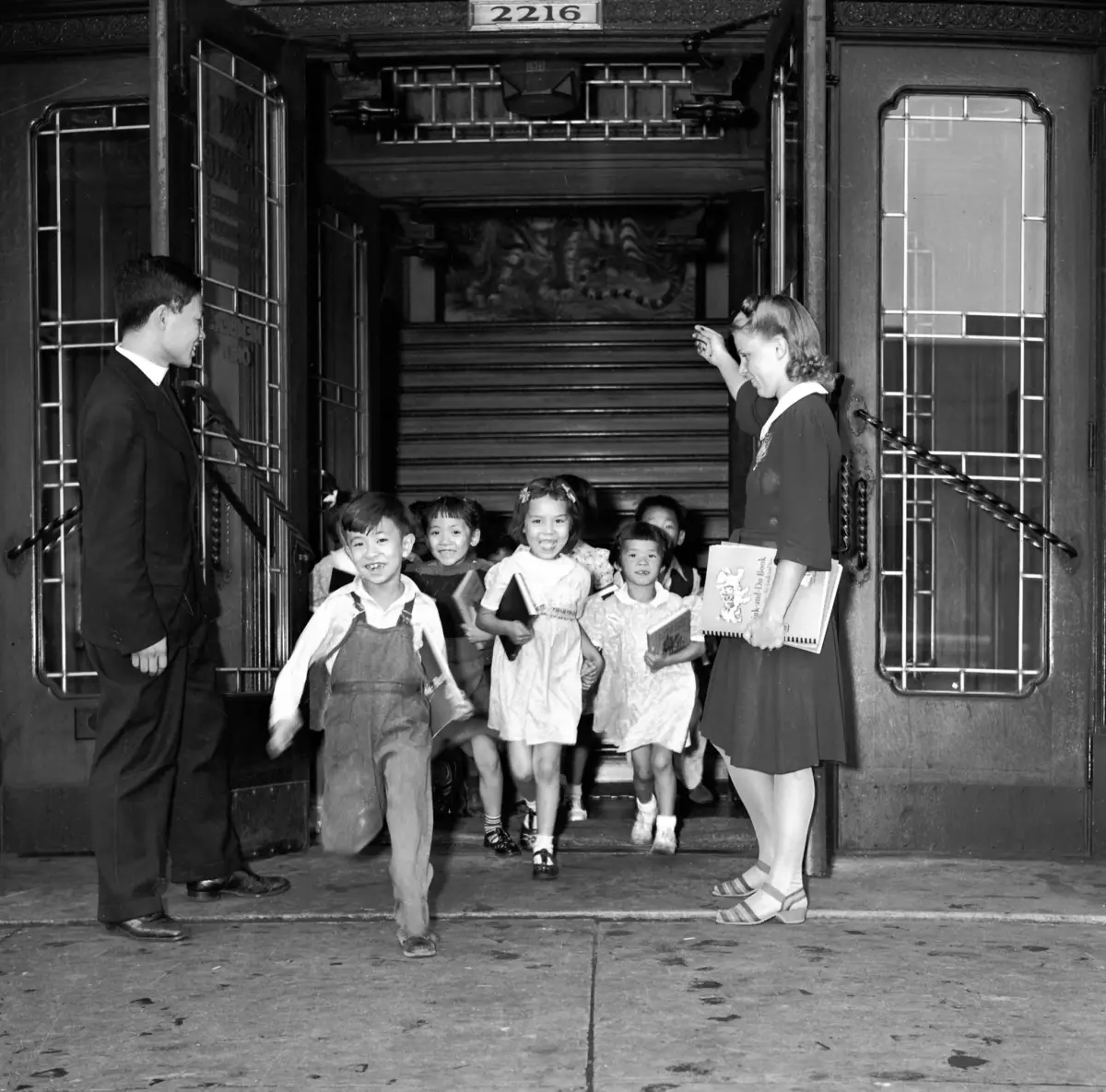
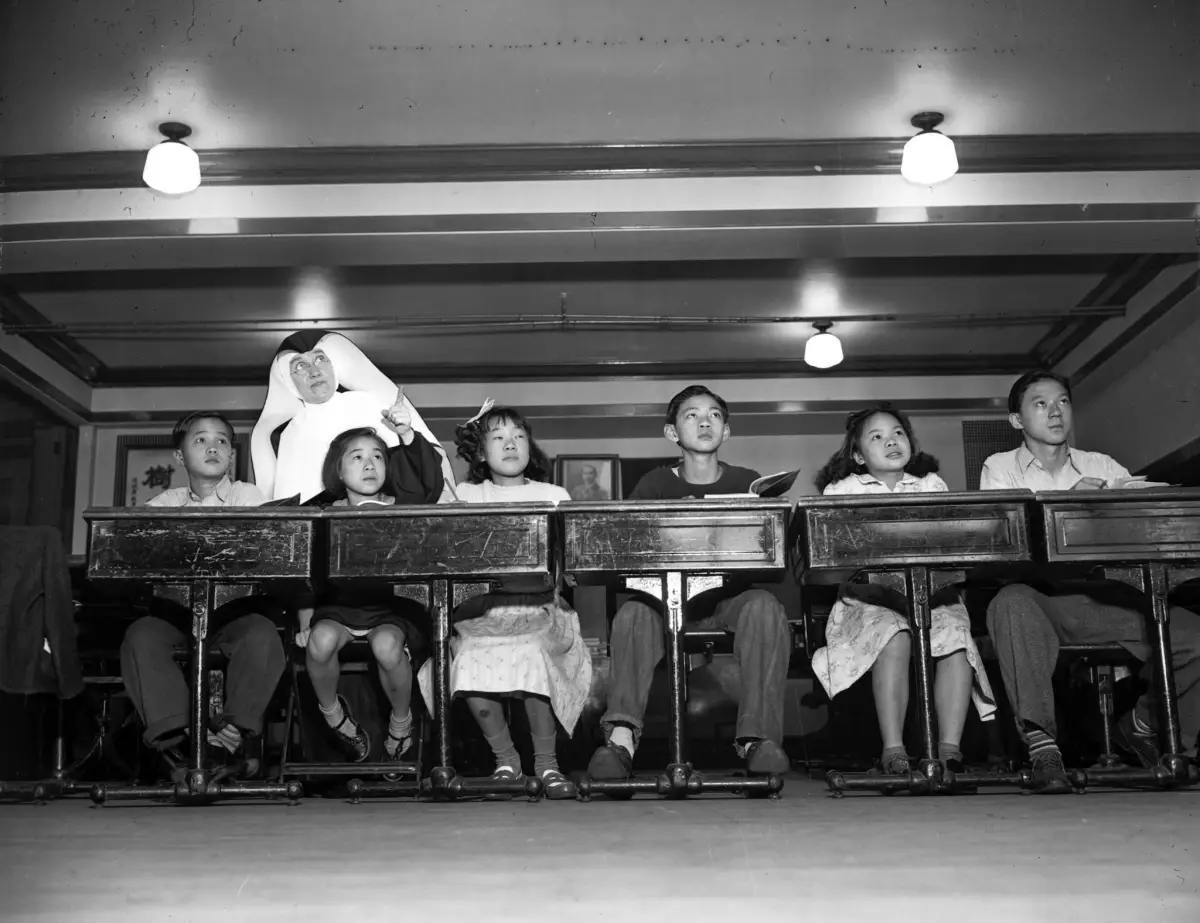
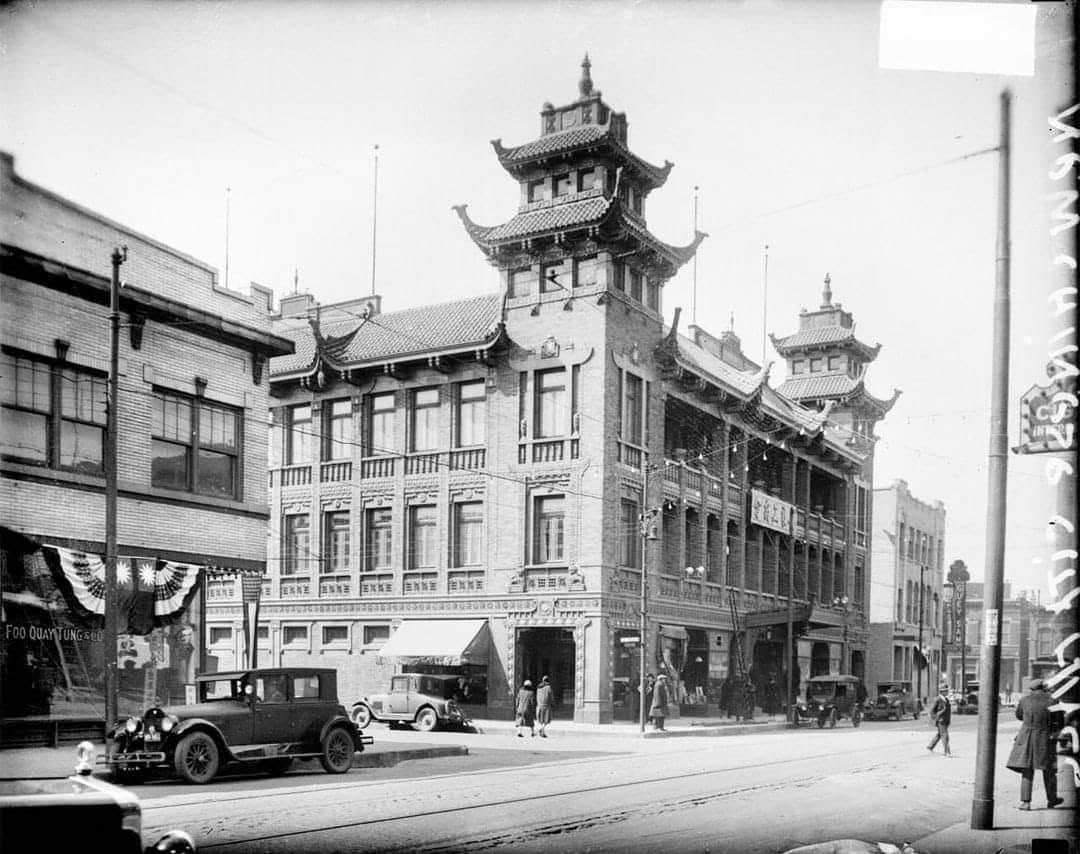
Construction ran from 1926 to 1928, at a cost of $1,000,000, making the building one of the first constructed in the new Chinatown district. Upon completion, it served as the association's headquarters and housed a Chinese-language school, meeting halls, and a shrine, functioning as an informal community "city hall" that mediated disputes among residents. The Chicago Tribune at the time described the three-story building as "one of the most expensive and elaborate buildings ever erected in America by the Chinese."
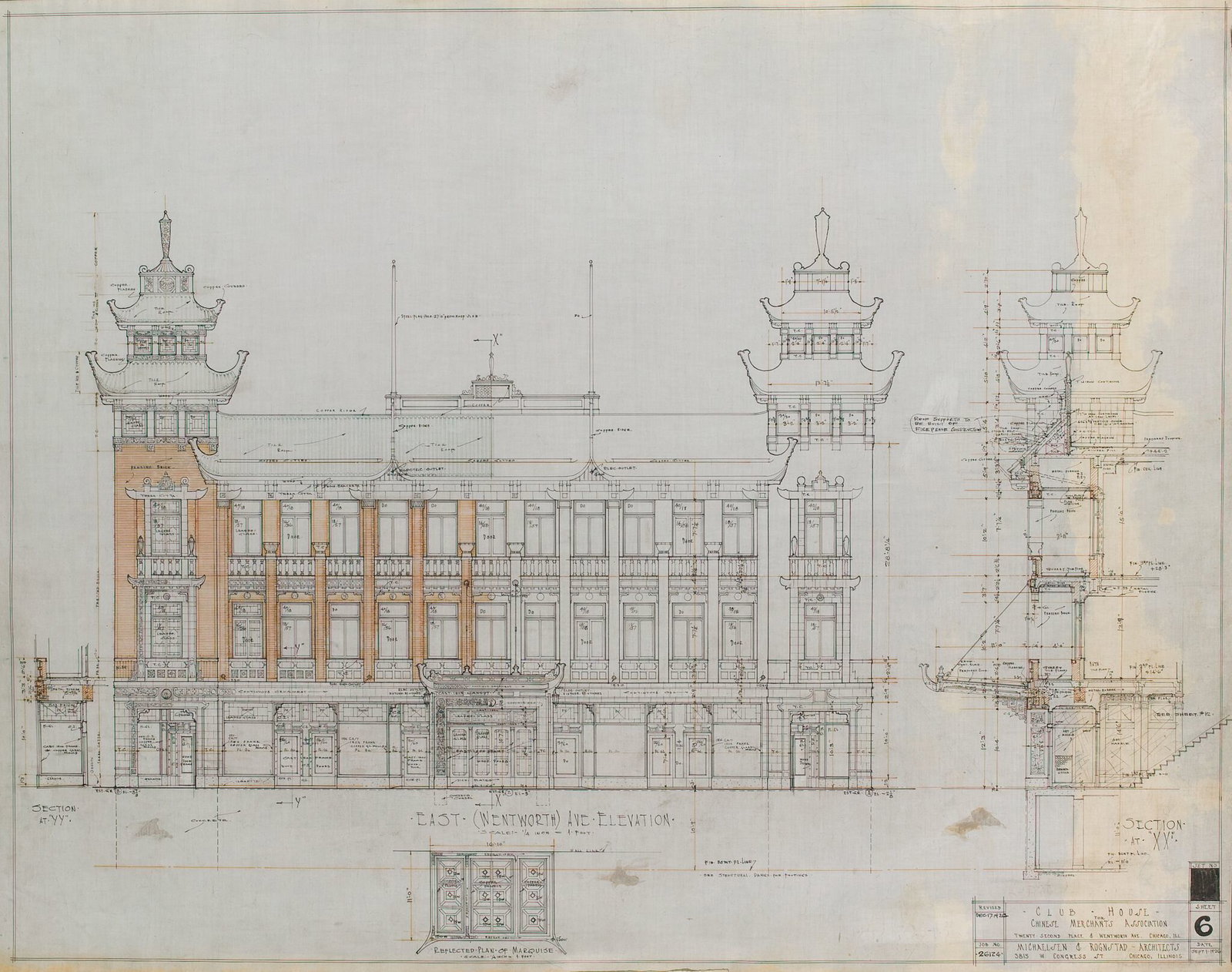
The building was designed by Christian S. Michaelsen and Sigurd A. Rognstad, two architects of Norwegian descent, since no Chinese-born architects were licensed to practice in Illinois at the time. The commission is said to have come through a personal connection, as one On Leong leader had previously worked with the firm. Michaelsen and Rognstad had earlier designed the Peacock Inn restaurant in Uptown for On Leong figure Jim Moy. Lacking direct familiarity with Chinese architecture, the two architects consulted a series of books on the subject, most notably German architect Ernst Boerschmann's Chinesische Architektur, to inform their design. Michaelsen focused primarily on the building's engineering, while Rognstad took the lead on stylistic decisions.
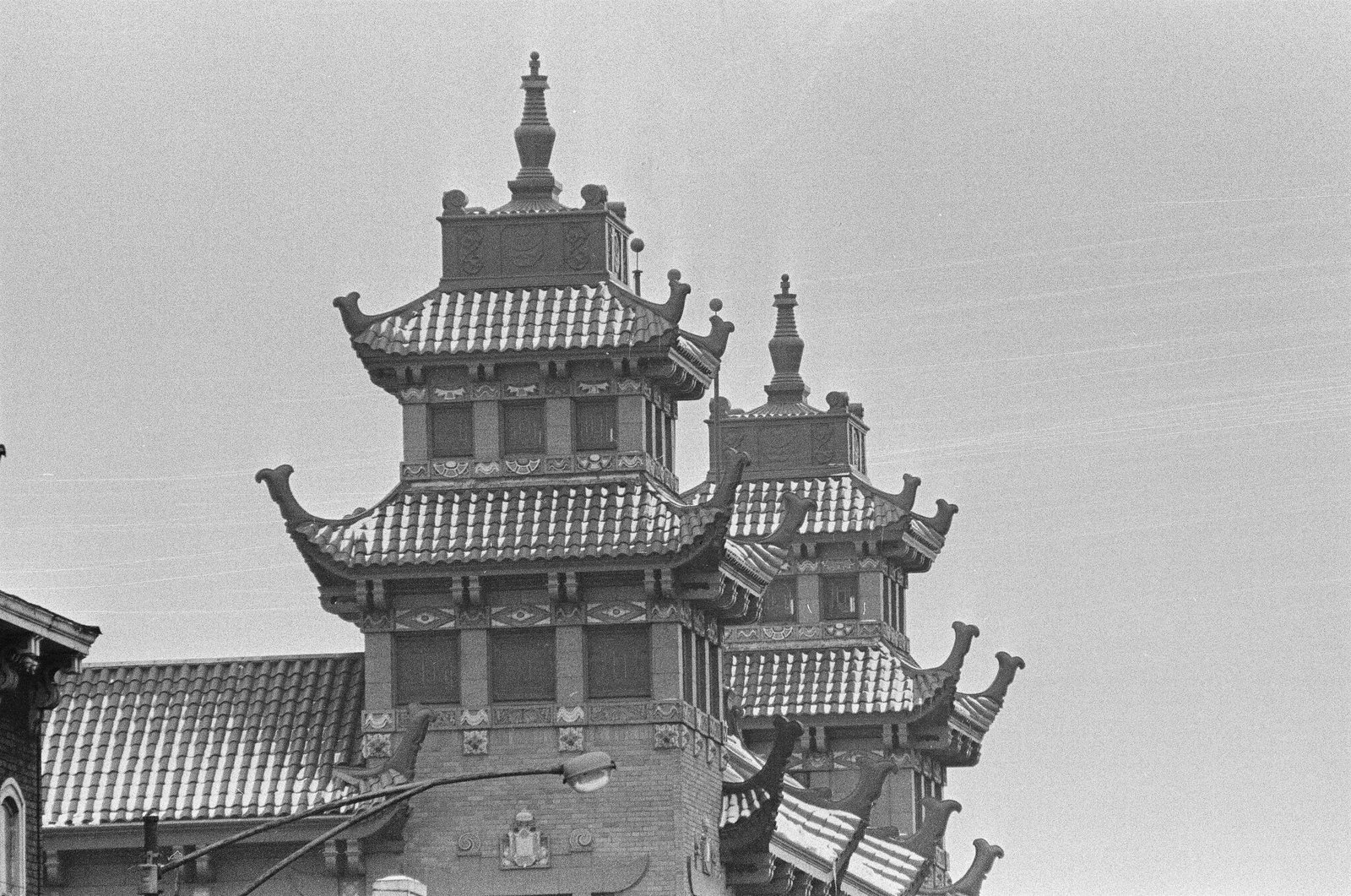
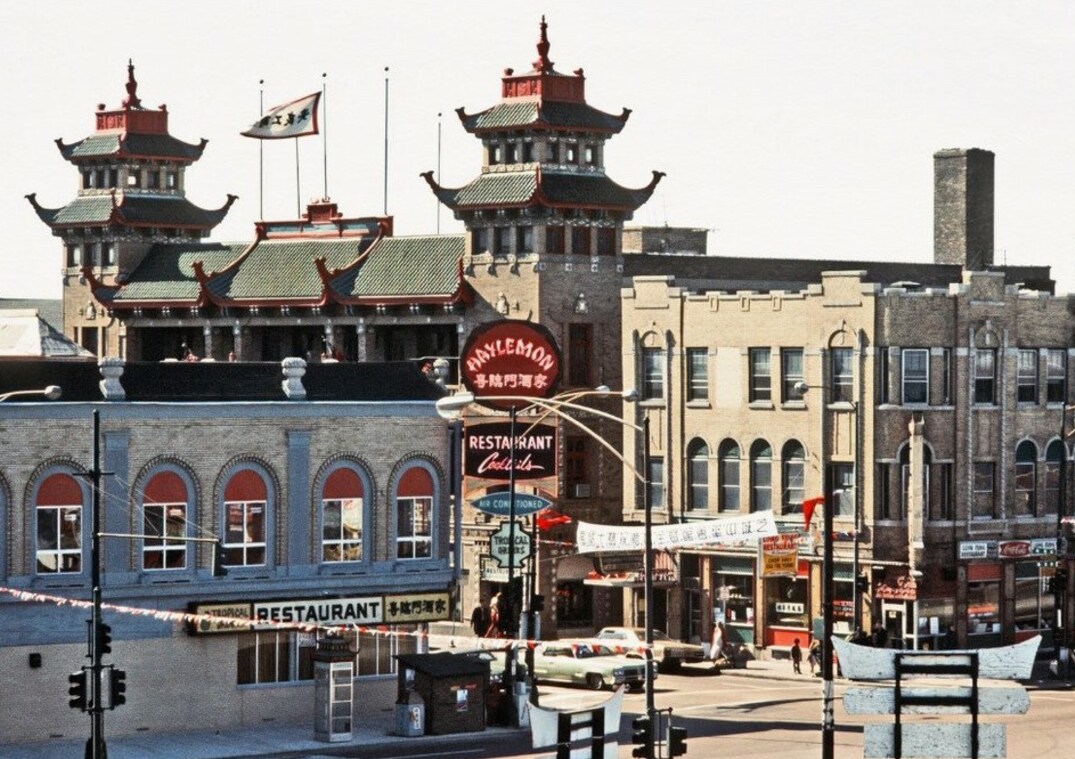
The finished building featured a facade clad in custom-fired terra cotta tile, twin pagoda-topped towers at the front, open-air corridors on the second and third floors, and richly colored ornamental detailing, including green-and-gold dragon motifs, which were regarded as among the finest terra cotta work of its kind in the city. However, the ornamental motifs were not authentically Chinese in origin, but rather a European-American reinterpretation and an early-20th-century example of architectural Orientalism.
The building remained the social and civic center of Chinatown for decades, until a major turning point in 1988, when the FBI and Chicago Police raided and seized the building after uncovering large-scale gambling operations. In 1993, the building was purchased by the Chinese Christian Union Church, renamed the Pui Tak Center, and designated a Chicago Landmark that same year (December 1, 1993), making it, to this day, Chinatown's only individually landmarked building. In 2025, the building was formally listed on the National Register, making it Chinatown's first National Register listing.
The building has housed numerous Chinatown businesses too, among them Kai Kai Restaurant, Golden Gate Restaurant, Chinatown Books and Gifts, and Sun Chong Lung.