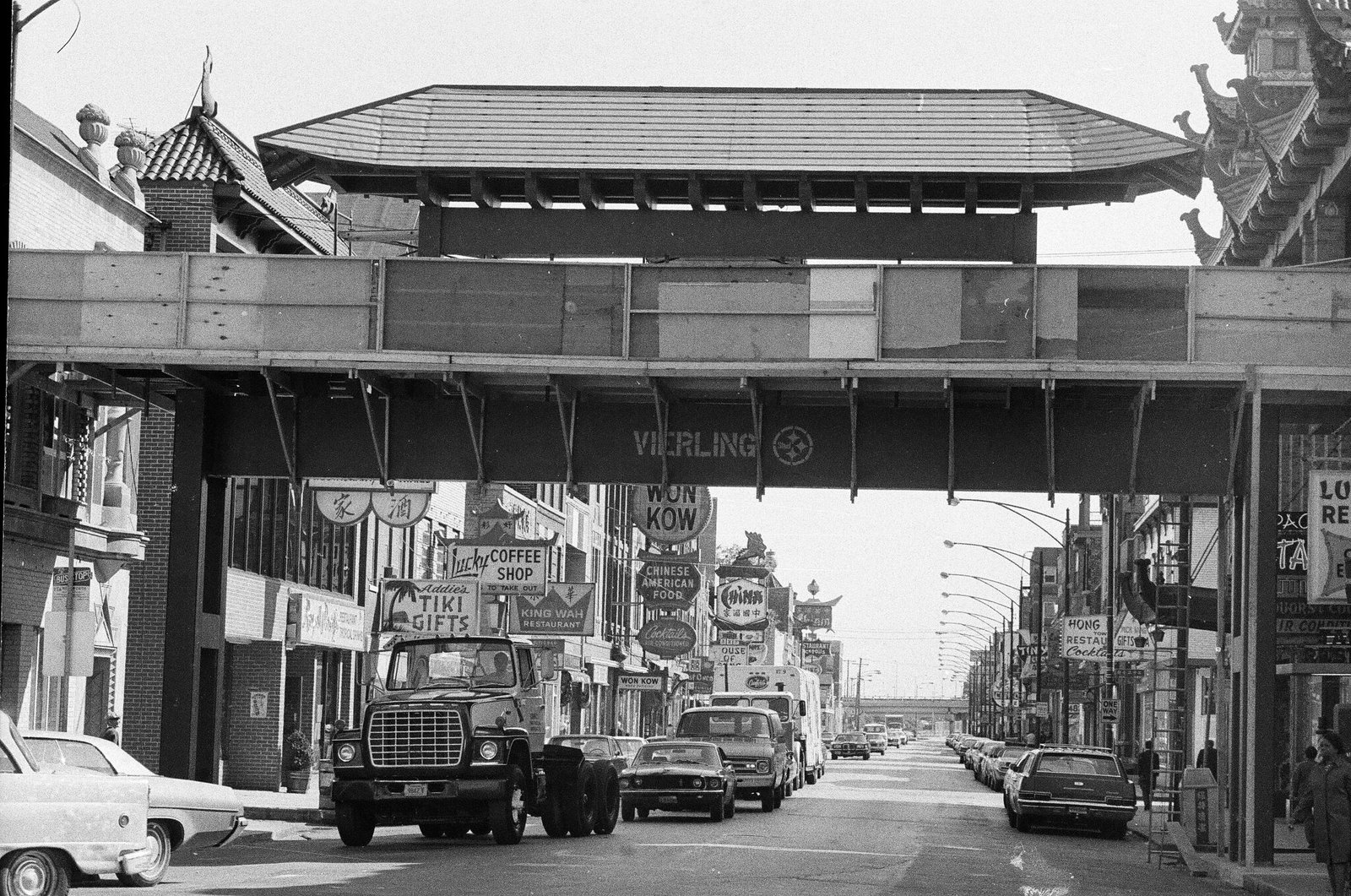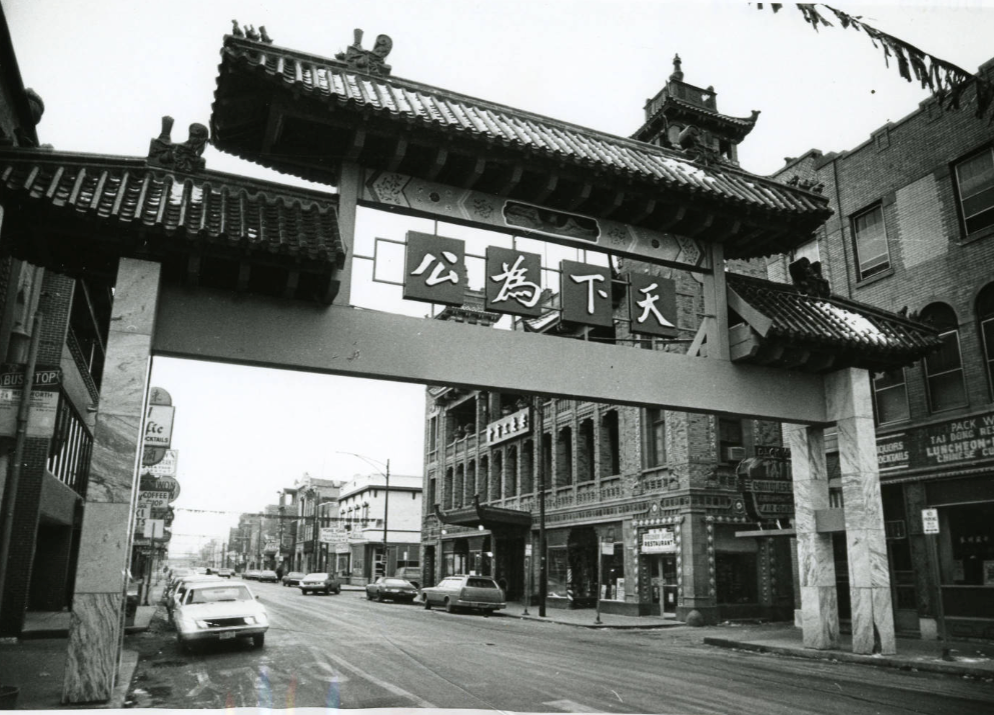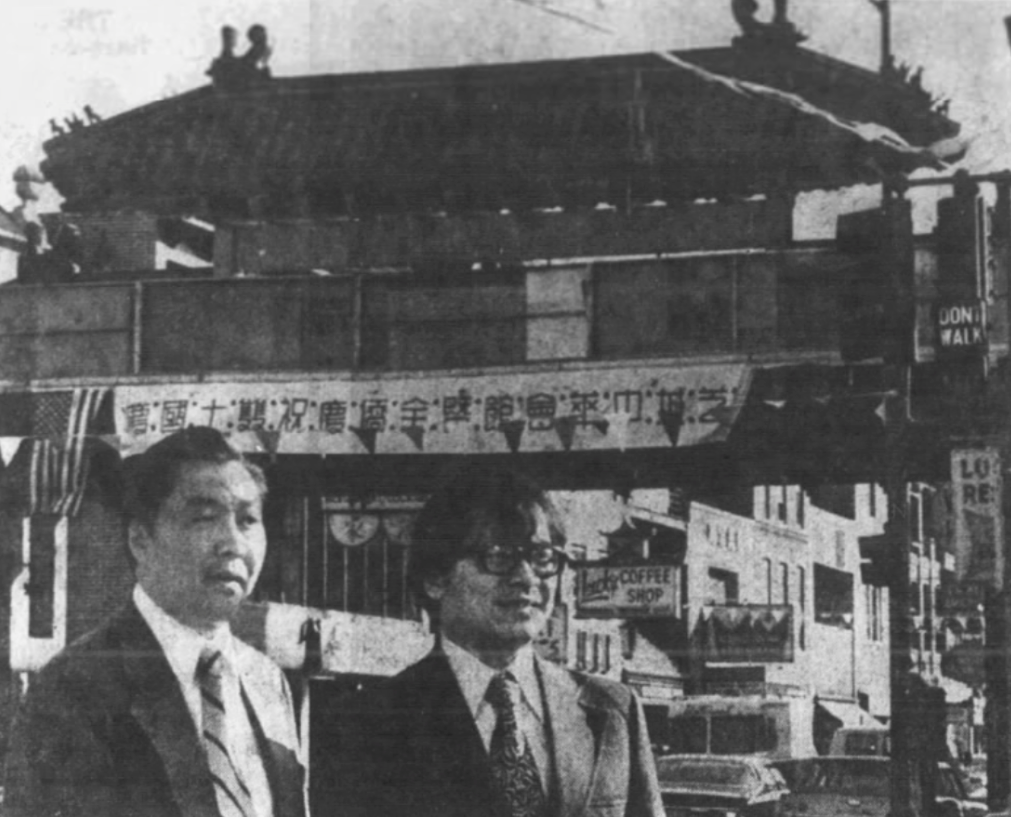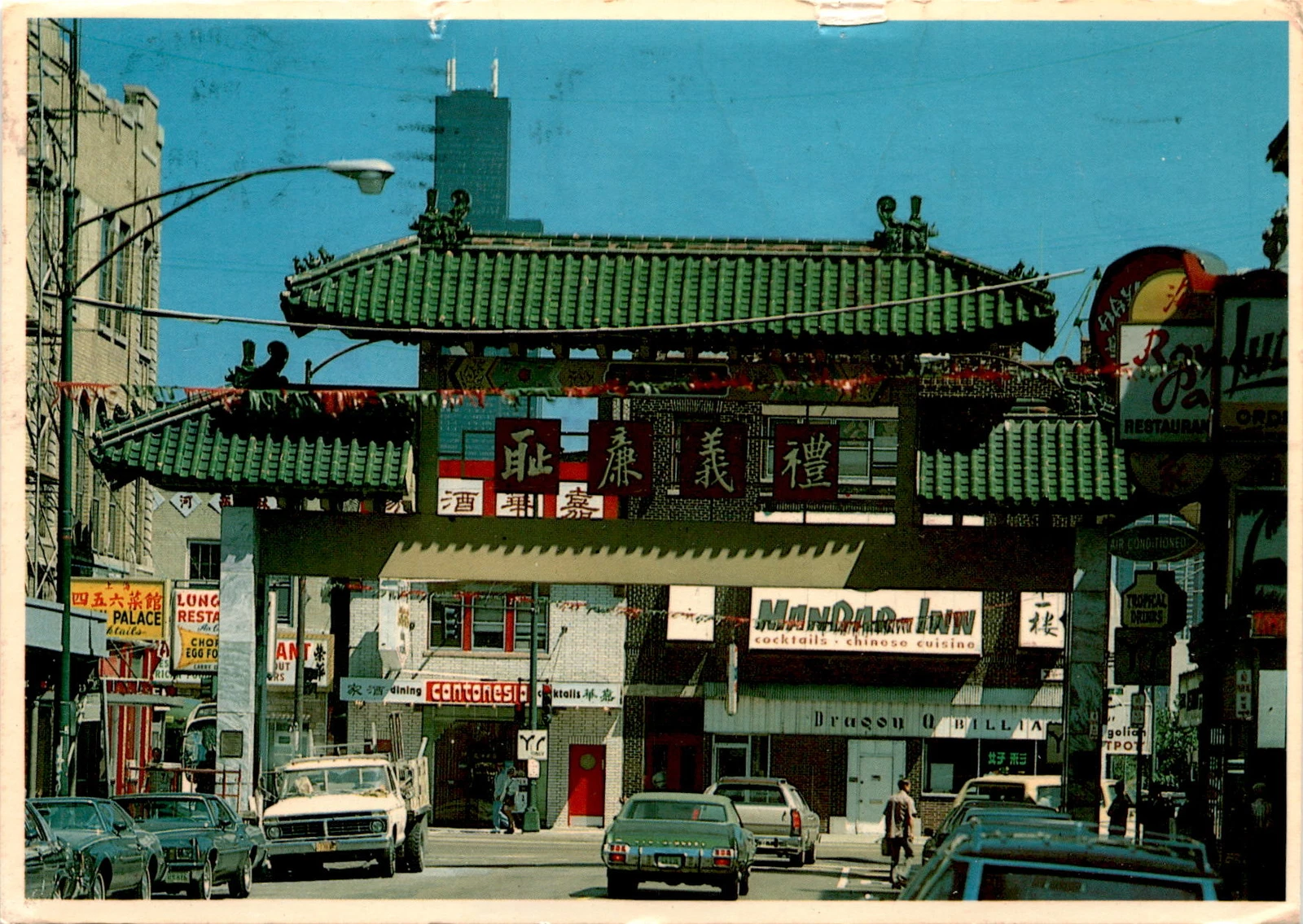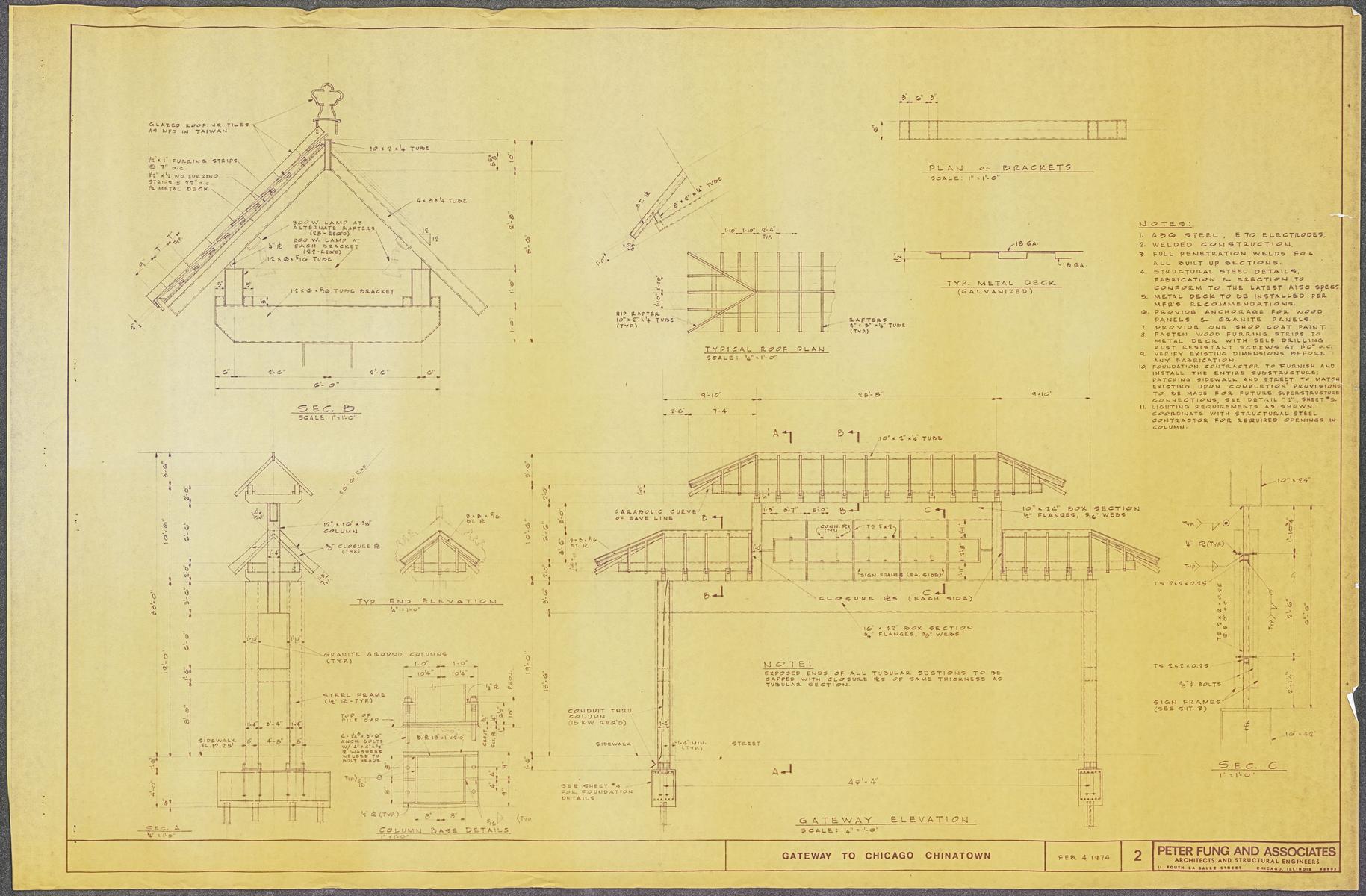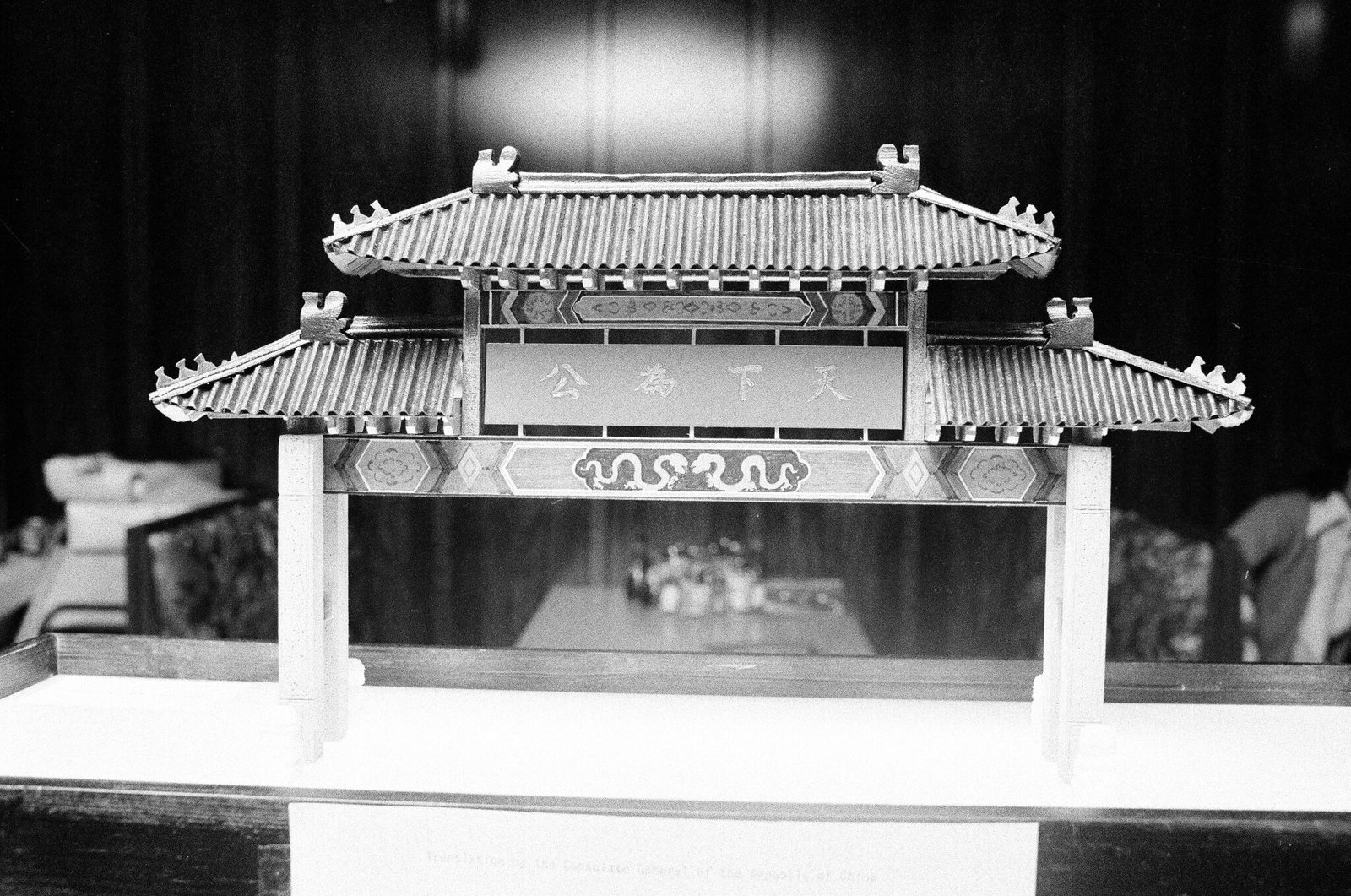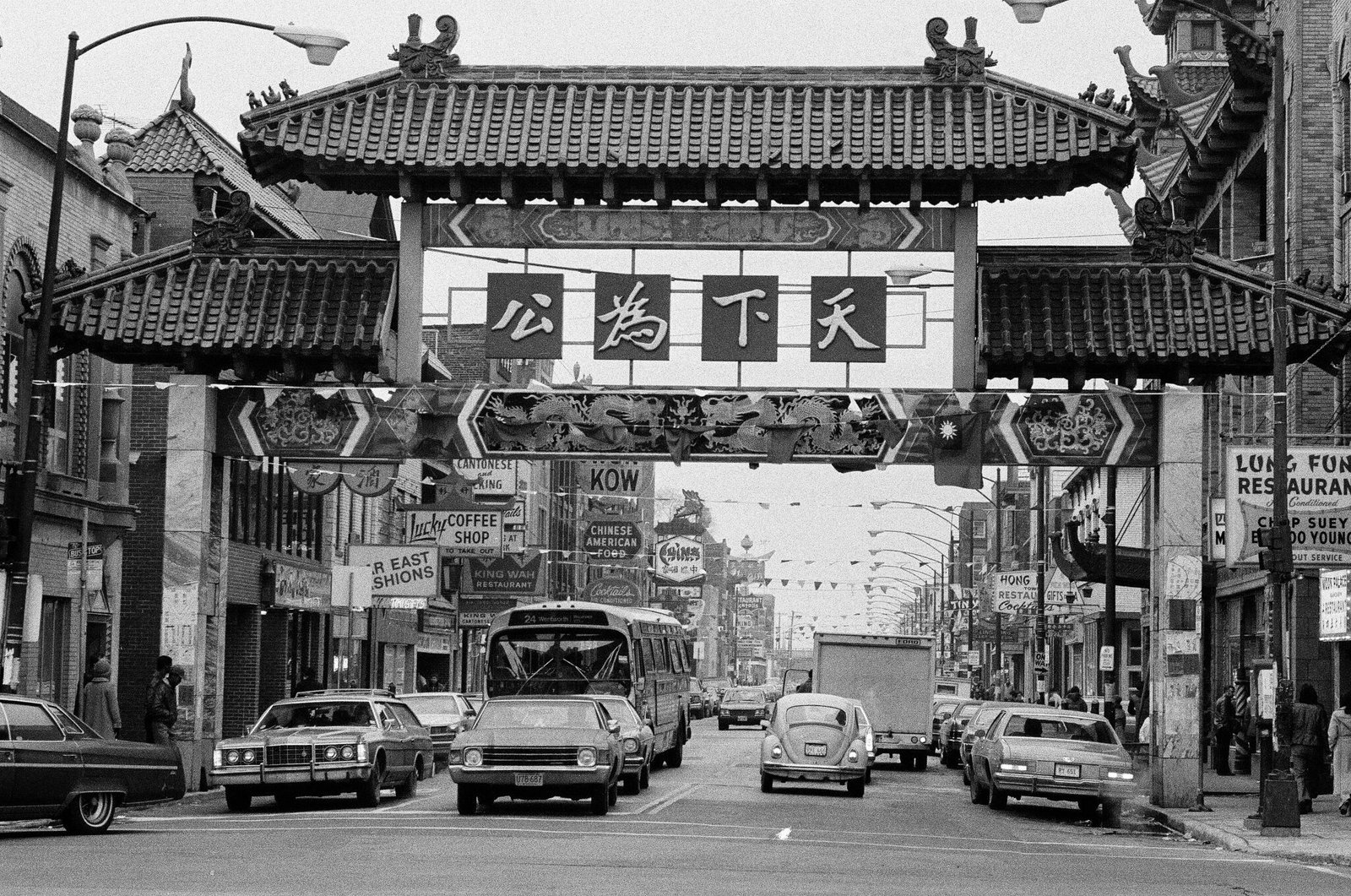
The Chinatown Gateway bridges Wentworth Avenue south of Cermak Road. The gateway idea was conceived by George Cheung (1932–1994), a native Chicagoan, civic leader, and vice president of the Chinese American Civic Council, in 1971 and completed in 1975. Recognizing the contributions of Chinese Americans to the nation's rich ethnic and racial diversity, Cheung envisioned the structure as a lasting symbol of Chinese culture, goodwill, and friendship in Chicago.
In 1974, Chicago Chinese-American architect Peter Fung (d. 1978) designed the Gateway, drawing on the tradition of the paifang (or pailou)—a form descended from the ceremonial torana, which arrived from India with Buddhism via the Silk Road during the Han Dynasty (202 BCE–220 CE). In China, these structures served several purposes: marking the boundary between sacred and secular space, honoring high-status individuals, families, scholars, or widows, and demarcating district boundaries, as in Beijing.
Unlike the wood and stone gateways in China, Chicago's Chinatown Gateway is a steel-framed structure measuring approximately 60 feet wide and 35 feet tall. It originally featured decorative tiles made in Taiwan and marble-clad steel columns incorporating surplus marble from Water Tower Place.
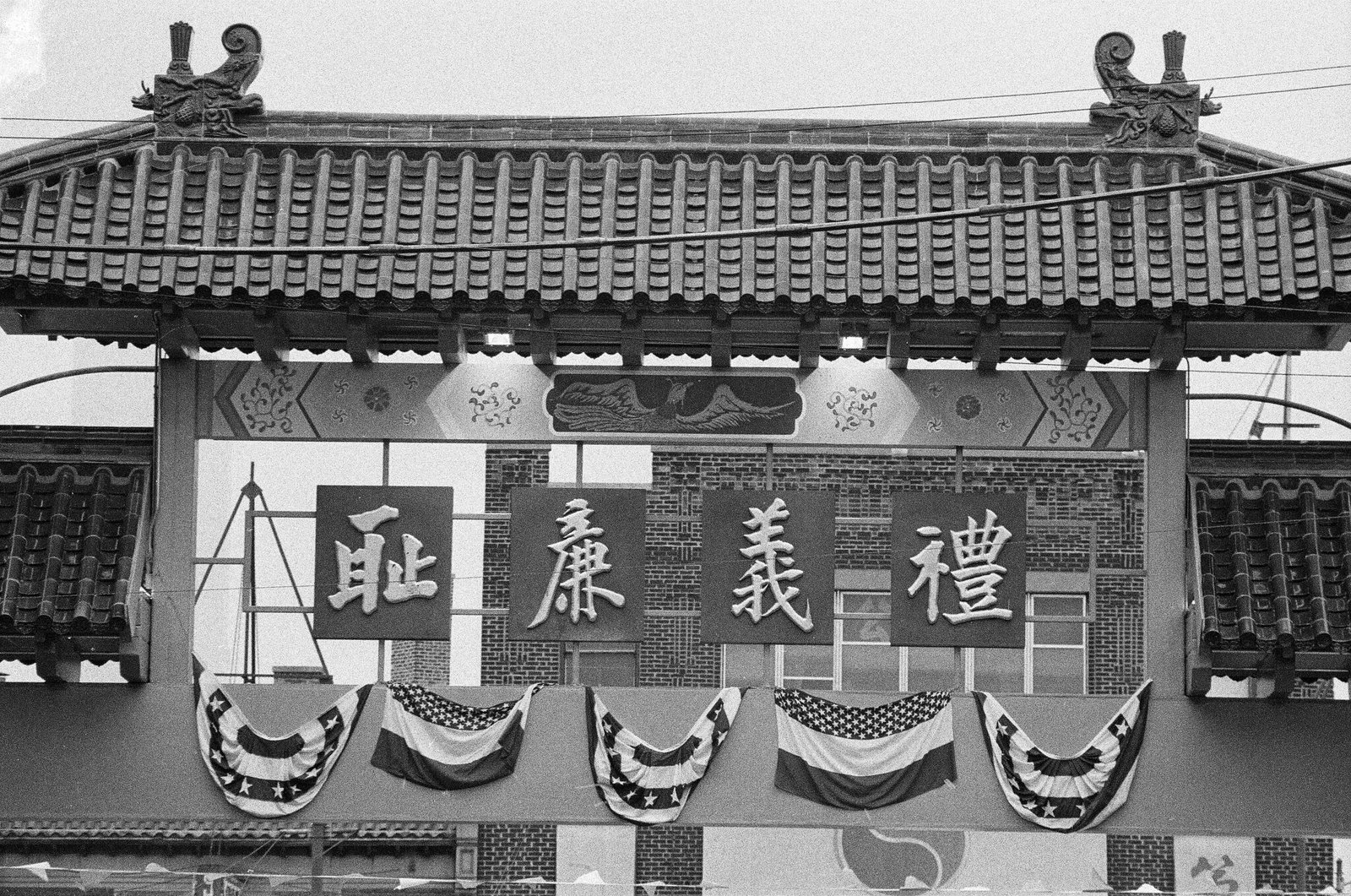
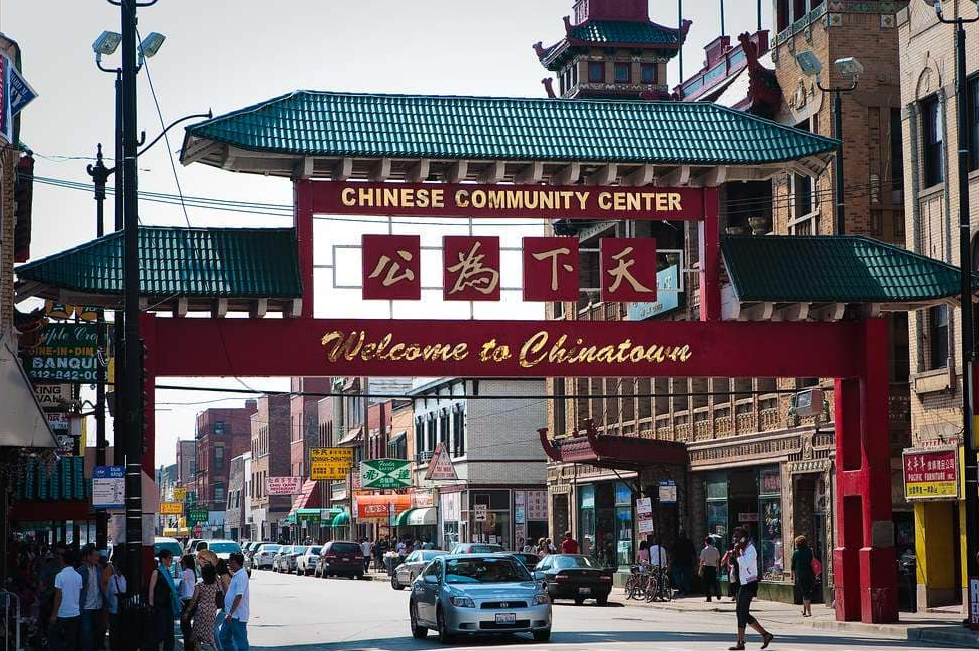
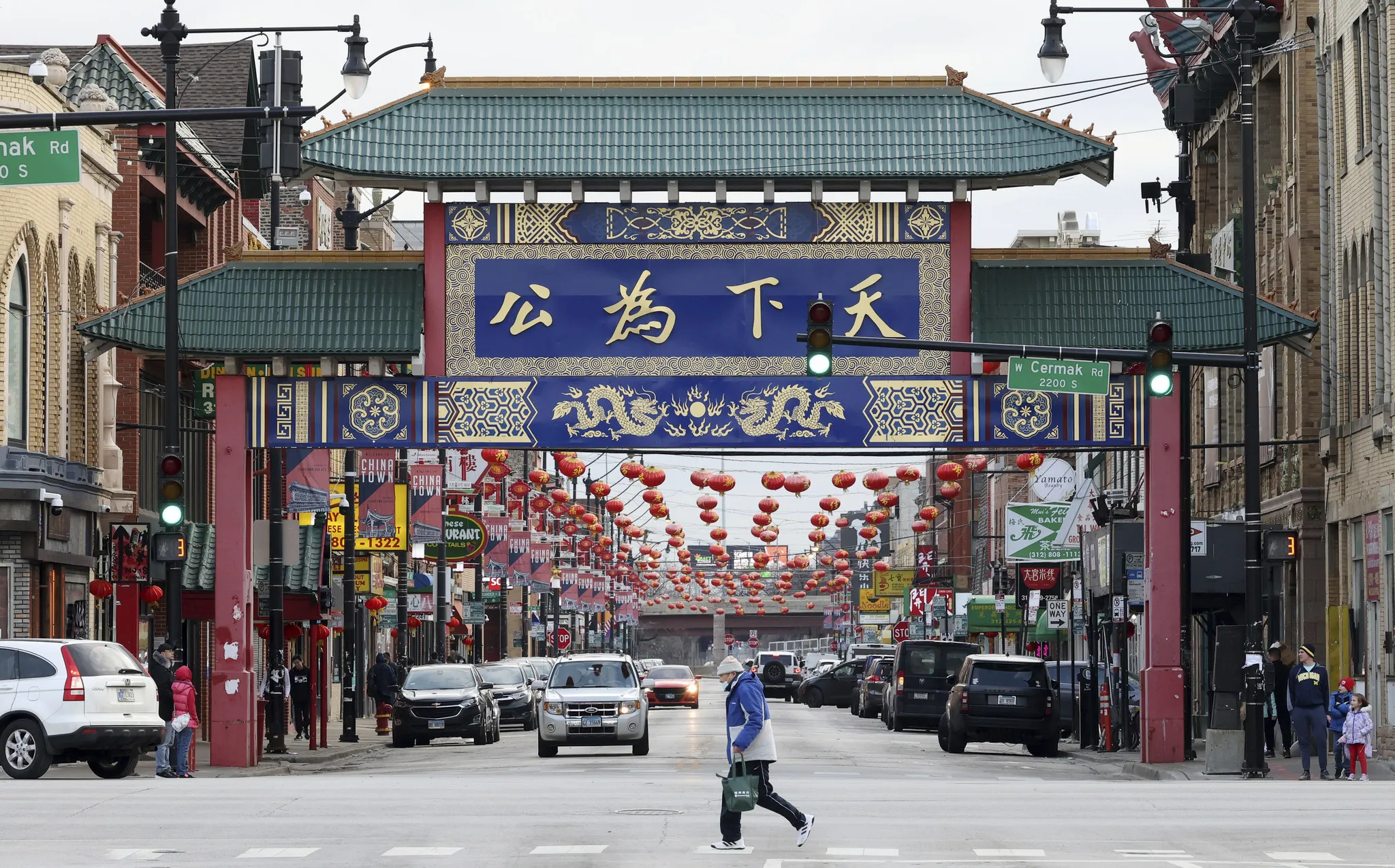
On the front, the Gateway bears the decorative Chinese inscription "天下為公" (The World Is for All), written in calligraphy by Sun Yat-sen (1866–1925), the founding father of the modern Republic of China. The phrase originates from the Confucian classic the Book of Rites and was later famously used by Sun as a guiding principle for his vision of a modern, democratic, and equitable society serving all citizens. On the back are four characters reading "禮義廉恥" (Propriety, Justice, Integrity, and Conscientiousness), virtues derived from the ancient Chinese text Guanzi·Mumin.
During the 2019 renovation, the original English inscription "Welcome to Chinatown" was replaced with a more authentic decorative panel depicting two dragons playing with a pearl, symbolizing mutual respect and harmonious coexistence. The upper portion of the Gateway was filled with traditional Chinese patterns and motifs, and the overall color was changed from bright red to a deeper vermilion.
On both the upper and lower eaves are four groups of mythical creatures: the dragon, phoenix, heavenly horse, and lion, representing strength, harmony, prosperity, and protection from evil, respectively. All decorative elements were designed and manufactured in China and then shipped to Chicago for installation.